Here's the thing nobody tells you
Solo pleasure and partnered sex are not the same thing. That's not a failure on either end. It's just physics. Your body responds differently to your own hand than it does to another person's touch, and adding a toy into the mix changes the entire dynamic. When you've spent weeks or months discovering what works for you alone with a lemon clitoral vibrator, bringing that into partnership can feel weirdly vulnerable.
Most people either hide it entirely or introduce it without context, which often makes a partner feel replaced. Neither is ideal.
The real barrier isn't your partner
Let me start with the psychological part, because the mechanical part is easier. When you've experienced consistent, reliable pleasure solo, you've also experienced control. You set the pace, the intensity, the pattern, the timing. You never had to negotiate your own orgasm. When a partner is involved, that control gets complicated. There's suddenly a dependent variable: their pleasure, their insecurity, their rhythm, their interpretation of what it means that you need or want a toy.
This doesn't mean your partner will feel threatened. But statistically, some partners do. And if you go in unprepared for that conversation, it can create resentment on both sides. You feel like they don't trust what you're doing, and they feel like you don't need them. Both feelings are often true and false simultaneously, which is why this needs talking through first.
The conversation before the toy arrives in bed
Don't spring this on someone mid-intimacy. That's not brave. That's ambush.
Instead, pick a moment when you're both clothed, calm, and not about to have sex. Say something like: "I've been exploring what feels good to me solo, and I've found that using a clitoral vibrator, specifically a lemon sucker-style toy, really helps me reach orgasm consistently. I want to keep doing that with you sometimes, not instead of you, but as part of how we connect. That matters to me, and I want it to matter to you too."
Notice what's in that sentence: specificity (the type of toy), motivation (consistency, not dissatisfaction), and inclusion (with you, not without you). This is different from "I need a vibrator because you're not doing it right." That message lands differently, even if you don't mean it that way.
Listen for the actual objection. Sometimes it's "I feel like I'm not enough," which is ego-based and needs reassurance. Sometimes it's "I don't know how to use it," which is logistics and very solvable. Sometimes it's genuine curiosity or even relief. Don't assume.
The mechanical integration part
Once you've talked, the actual integration is much simpler.
First, decide together whether the toy is a warm-up tool, a during-sex tool, or a finishing tool. Warm-up means you use it solo or they use it on you before penetration or other stimulation begins. That's often the easiest entry point because it doesn't interrupt flow. During-sex means you or they uses it while you're also engaged with them in another way. That requires some choreography but feels more integrated. Finishing means you bring it in when you need that last push over the edge, which can feel intimate if framed right but can also feel transactional if either of you is resentful.
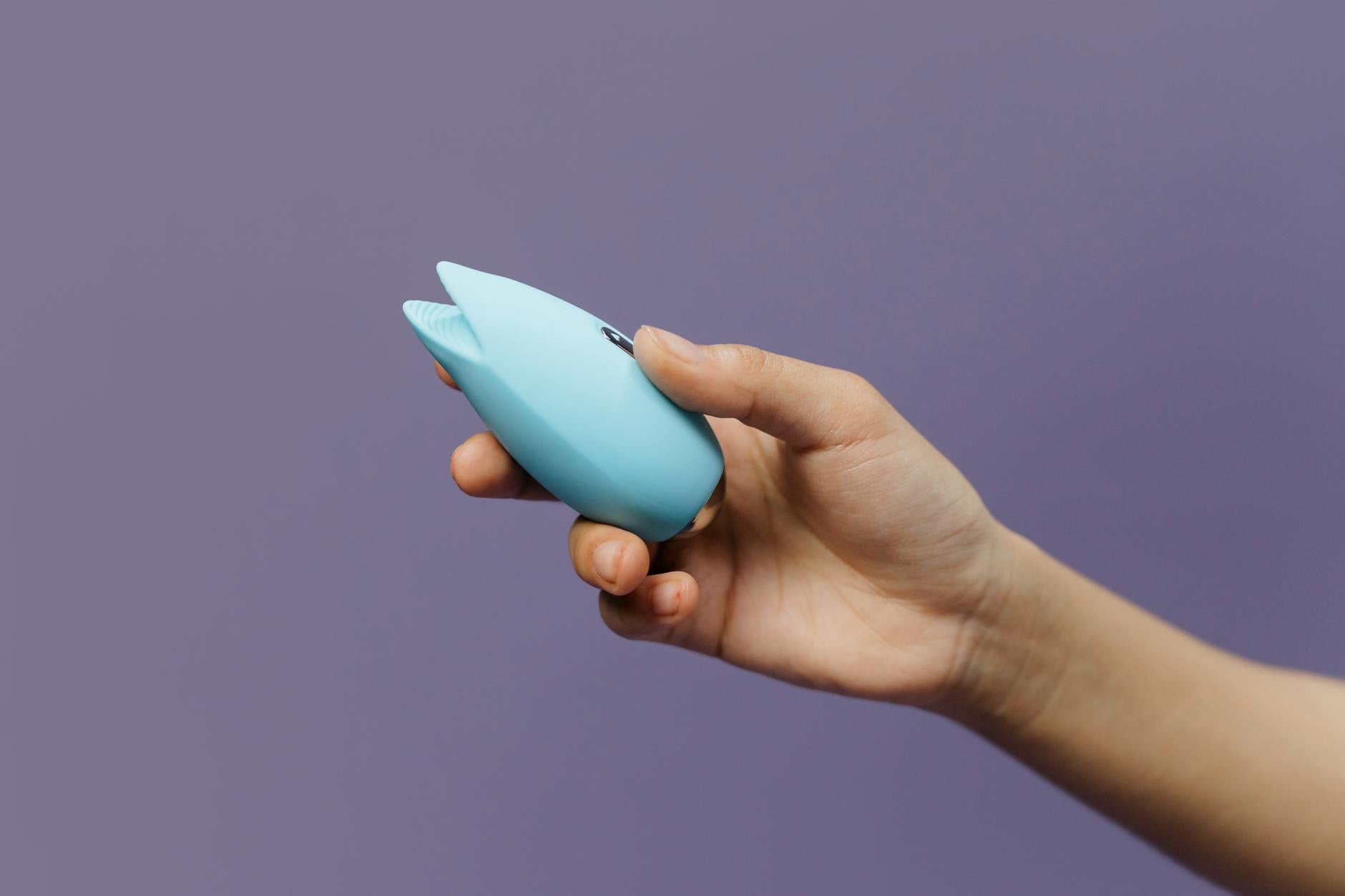
Try warm-up first. Let your partner hold the lemon vibrator and watch your response. This does two things: it makes them active rather than passive, and it lets them see directly how your body responds. That visual feedback often dissolves the "replacement" worry faster than a thousand reassurances.
Start with lower intensity settings. You probably know that your solo sweet spot is pattern 4 or 5. With a partner watching and touching you simultaneously, the whole nervous system is different. Less is often more initially.
When it gets awkward in real time
Lemme be real: the first time is usually weird. Someone's hand is in the way, or the angle feels off, or someone giggles at an inconvenient moment. All normal.
If you feel tension rising, pause and check in. "How are you feeling?" is a weird question mid-pleasure, but it's also the best one. Often what feels like rejection is just unfamiliar territory and a little shyness on their end.
One practical move: have them focus on non-clitoral touch while you use the lemon vibrator. Their hands on your breasts, your neck, your inner thighs, inside you if that's part of your dynamic. This way, the toy isn't the only thing happening, and your partner stays genuinely involved rather than spectating.
The ongoing rhythm
Here's what I see happen in couples after the integration works: the toy becomes part of your shared language. It's not hidden or shameful. It's just there, like lube or condoms. Some sessions you use it, some you don't. Sometimes your partner uses it on you, sometimes you hold it yourself.
What matters is that you don't abandon solo pleasure entirely. The lemon vibrator or lemon sucker toy that got you here solo is still your tool. Keep that practice. It keeps you connected to your own pleasure independent of anyone else's schedule or mood, which paradoxically makes partnered sex better because you're not desperate or resentful.
The redirect when they ask to use it wrong
Eventually, a partner might suggest using it in a way that doesn't work for you. Maybe they want to use it during penetration when you prefer it before. Maybe they want higher intensity when you know that numbs you. This is actually a gift because it means they're thinking about it and not refusing it.
Here's how to handle it without defensiveness: "I like your thinking. Here's what I've learned works best for me," and then give them options within your boundaries. "I could use it on lower settings during, or I can get to the edge with it first and then we do penetration. Which feels better to you?" You're collaborating, not correcting.
Why this matters beyond sex
This process of integrating solo pleasure into partnership is actually a master class in communication and vulnerability. You're literally showing someone the most private part of your sexuality. If you can do this well, you can navigate harder conversations too. Money, time, family, grief. All of it requires the same skill: saying what you need, listening for what they're afraid of, and finding a path that includes both of you.
Your lemon clitoral vibrator isn't the point. The point is that you deserve to know your own pleasure so well that you can share it confidently.
FAQ
Can I use a lemon vibrator if my partner has a smaller body or is sensitive to sensation?
Absolutely. The lemon vibrator has multiple intensity settings, which is why it's useful for couples with different sensitivity levels. Start at pattern 1 and let them experience it directly before deciding. Also, smaller bodies don't need smaller toys. Size and fit are different variables. If concern is about stimulation sensitivity, lower intensity solves that more reliably than equipment swaps.
What if my partner refuses to let me use toys during sex?
That's a negotiation, not a rule. Refusal often masks insecurity or misinformation. Ask specifically what the concern is. "Does it feel like I don't want you?" "Are you worried about safety?" "Does it seem unfamiliar?" Different objections need different responses. If they refuse after you've addressed the actual concern, that's a deeper conversation about autonomy and partnership that might benefit from a couples therapist or relationship coach.
Is it normal to need a vibrator with a partner but not solo?
Yes, and the inverse is also normal. Your body isn't being inconsistent. Partnered sex involves different neurological activation than solo play. Some people need more stimulation when another person is involved because attention is divided. Some people need less because arousal builds differently. Neither is wrong. Use what works.
Should I hide the lem vibrator or lemon sucker toy if my partner's friends come over?
That depends on your comfort level, but consider this: you're hiding evidence that you have a healthy sex life. That's internalized shame talking. A locked drawer is reasonable privacy. Elaborate concealment suggests you're embarrassed of your own pleasure, which often transfers to your partner. Keep it accessible but private, like you would any intimate item.
How do I know if introducing the toy is actually the problem or if it's masking a relationship issue?
If your partner suddenly cooperates after the toy is involved and you assumed they were refusing before, the toy wasn't the problem. If they cooperate with the toy but still withdraw emotionally after sex, or if sex still feels disconnected even with the vibrator working beautifully, that's relationship work, not toy work. The lemon vibrator solves mechanical friction, not emotional distance. Don't let it become a Band-Aid for avoidance.
Can I use a lemon clitoral vibrator while my partner uses a different toy or penetrates me?
Yes, many couples use multiple toys simultaneously. However, this requires clear communication about rhythm, boundaries, and comfort. It's not beginner territory. Start with one toy, both people knowing how it works, before adding complexity. Once you've integrated one lemon vibrator well, adding another element is just logistics.
What happens next
Integrating toys into partnered sex isn't about fixing a broken dynamic. It's about expanding what's possible together. When you bring your lemon vibrator into the bedroom with intentionality and honesty, you're showing your partner that your pleasure is worth planning for. That matters more than the toy itself.
If you're still navigating what works for both of you, or if you want to deepen the communication part of this transition, I'm here to help. Reach out at /contact and let's talk through the specific dynamics in your relationship.