Let's name the actual fear
Your partner doesn't really think toys kill spontaneity. That's the surface objection. Underneath it, they're usually worried about one of three things: that you need a toy to finish, that introducing one means they're not enough, or that the moment will get awkward the instant you pull something out. None of those fears are about the vibrator. They're about feeling wanted and competent. And that's actually good news, because it means there's a real conversation to have.
What spontaneity actually looks like
Here's the thing nobody talks about. Spontaneity doesn't mean "no communication." It means you don't have to schedule sex three weeks in advance or follow a rigid script. It's the freedom to move toward each other without bureaucracy.
But introducing a lemon clitoral vibrator doesn't eliminate that. It just changes the nature of the conversation. Instead of "We need to plan a sex date," you're saying "Hey, I want to try something that helps me feel more," which is actually more spontaneous than the alternative: resentment building quietly until you're both too disconnected to touch each other at all.
I've worked with hundreds of couples, and the ones who think toys are "unnatural" or "break the mood" often have one thing in common: they've never actually had a real talk about what each person wants. The toy becomes the scapegoat for a deeper gap.
The conversation to have first
Don't lead with the vibrator. Lead with curiosity about your partner's real concern.
Try: "I've noticed you seem hesitant about me using toys. Can you tell me what that feels like for you?" Then actually listen. Don't defend. Don't explain why they're wrong. Just hear it.
You might hear "I feel like I'm not satisfying you enough," which is a vulnerability. Or "It feels clinical," which is an aesthetic preference. Or "I worry you'll become dependent on it," which is actually a misunderstanding about how bodies work but it's rooted in care. Each of those deserves a different response.
Once you understand the real concern, you can address it specifically. "I want you to know that you absolutely satisfy me. What I want to explore is just more satisfaction together. It's not about replacing anything you do. It's about expanding what we both get to feel."
How to introduce it without the awkwardness
If your partner is worried that whipping out a toy mid-session will feel jarring, you're probably right that a surprise isn't the move here. But planned introduction isn't the same as unsexy.
Try building it into foreplay naturally. While you're kissing or touching, you might say "I want to try something I think we'll both really like," and bring out a lemon vibrator. No big ceremony. No "Let's discuss the mechanical specifications of this device." Just a matter-of-fact introduction like you'd suggest switching positions.
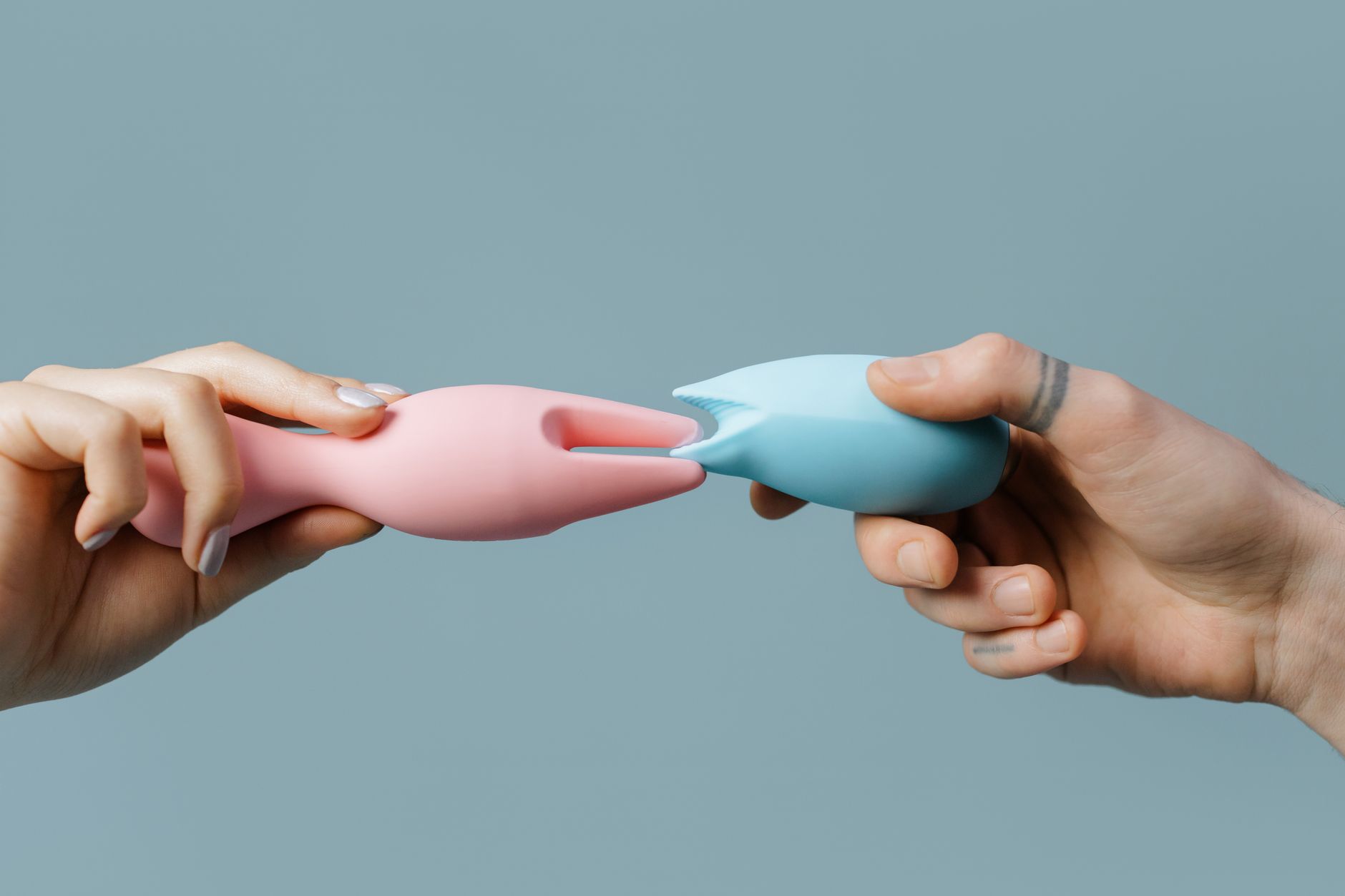
The lemon clitoral vibrator's suction technology is different from anything most people have used before. It feels focused and gentle compared to traditional vibrators. Let your partner see that. Let them feel the sensation on their own body first if they want to. Demystifying it removes the weirdness.
The pattern that actually works
Here's what I see happen with couples who get past the resistance: they start using a toy as a bridge in their intimate time. You might start a session manually, build arousal together, then introduce the vibrator for the final phase. That way your partner still feels essential to the arc of the encounter. They're not watching from the sidelines while a machine does all the work. They're part of the progression.
A lot of partners also find they enjoy holding the vibrator themselves. That's a massive mindset shift from "this toy is replacing me" to "this tool lets me touch my partner in a way that creates more pleasure for both of us." Suddenly they're not threatened. They're collaborating.
When your partner uses the lemon vibrator on you, the dynamics change completely. They're in control, they're paying attention to what works, and they get the reward of watching you respond. That's intimate. That's connected. That's the opposite of impersonal.
The deeper win nobody mentions
Here's what happens after a couple gets past the toy resistance: their entire intimate life often improves. Why? Because having that first conversation about what each person wants sexually tends to crack open all the other conversations that have been waiting.
If you can talk about a vibrator, you can talk about frequency, about fantasies, about what actually feels good versus what you thought you should want. Suddenly you're not guessing. You're not performing. You're not resenting each other in slow motion.
Your partner's hesitation about spontaneity is actually an invitation. It's saying "I care about this and I'm scared." That's workable. That's more intimate than smooth sailing.
When your partner still says no
Sometimes even after the conversation, your partner isn't ready. That's real. Respect it. But also don't just accept it and move on resentfully.
Try a specific time frame: "I'd love to try this together in a month. Could we check in about it then?" Give them time to sit with the idea. People often need to marinate on things. Sometimes a partner needs to realize that you'll still love them, they'll still be desired, and the toy isn't a referendum on their adequacy.
You might also frame it as something you want to explore with them specifically. "I want to experience this with you because I want more connection with you." That's different from "I want to bring toys into our sex life." One is about them. One is about external addition.
And listen, if after genuine conversation and time your partner still refuses and this matters to you, that's information about compatibility. That's not a failure. That's clarity. You deserve a partner who wants to expand your pleasure, not gate-keep it.
The actual spontaneity bonus
Here's something unexpected: couples who use vibrators together often report more spontaneity over time, not less. Why? Because once the initial conversation happens and you've tried it together successfully, bringing one into the bedroom later becomes normal. It's not a big discussion anymore. "Want to?" "Sure." That's it.
Spontaneity isn't the absence of communication. It's the freedom to communicate quickly and move forward. A lemon clitoral vibrator, once it's normalized between you, becomes just another tool in the drawer, like lube. You don't need a meeting about it every time.
And honestly, that's kind of the dream for couples. You get to skip past all the negotiation and just be together.
FAQ
Will my partner feel replaced if I use a vibrator during sex?
Not if you're intentional about how you introduce it. Partners feel replaced when toys show up unannounced or when communication is missing. But if your partner is involved in choosing it, using it together, and you're clear about why you want it (more sensation, more pleasure for both of you, exploration), the vibrator becomes a shared experience. Many partners actually find it hot to watch or to be the one controlling it.
Can I use a lemon vibrator solo if my partner is uncomfortable with it?
Absolutely. Your solo pleasure is yours alone. That said, if the discomfort is about something deeper (insecurity, different values around sexuality), it might be worth exploring separately through conversation or therapy. Your individual exploration doesn't require your partner's permission, but if the relationship is long-term, the underlying concern might need attention.
How do I know if my partner's hesitation is about the toy or about something else?
Ask directly. "When you think about me using a vibrator, what comes up for you?" Listen for themes. Is it about adequacy? About feeling seen? About shame around sexuality? Those are completely different issues, and each one needs a different conversation.
What if my partner wants to use the vibrator but I'm the one who's unsure?
That flips the script, but the principle is the same. Explore what the hesitation is. Is it about control? About feeling obligated? About unfamiliar sensation? Start small. You don't have to jump into full use immediately. Let your partner use it near you. Let yourself get curious instead of defensive.
Is there a "right" time to introduce a vibrator in a relationship?
There's no timeline. Some couples introduce toys on their first night together. Others have been together for decades and try one for the first time. The right time is whenever both people feel genuinely curious rather than pressured. The conversation matters more than the timing.
How do I bring this up without making my partner feel like something is missing?
Lead with desire, not lack. "I want to explore what else we can feel together" is different from "Our sex life needs fixing." Frame it as expansion, not correction. And make sure your partner feels genuinely wanted in other ways too, so introducing a toy doesn't feel like it's coming out of nowhere or out of dissatisfaction.
Here's what actually matters
Your partner's concern about spontaneity is real, but it's usually a symptom of something else. The actual issue is whether you both feel safe, desired, and heard. A lemon vibrator doesn't fix those things. But the conversation that gets you to wanting to try one together? That absolutely can.
Spontaneity isn't about avoiding communication. It's about trusting each other enough to say "I want to try something," and knowing the answer will be curiosity, not defensiveness. That's the intimacy that toys can actually unlock. Get the conversation right, and the vibrator becomes just the beginning.
If you're navigating this alone or need support working through relationship friction around sexuality, reach out. That's exactly what these conversations are for.