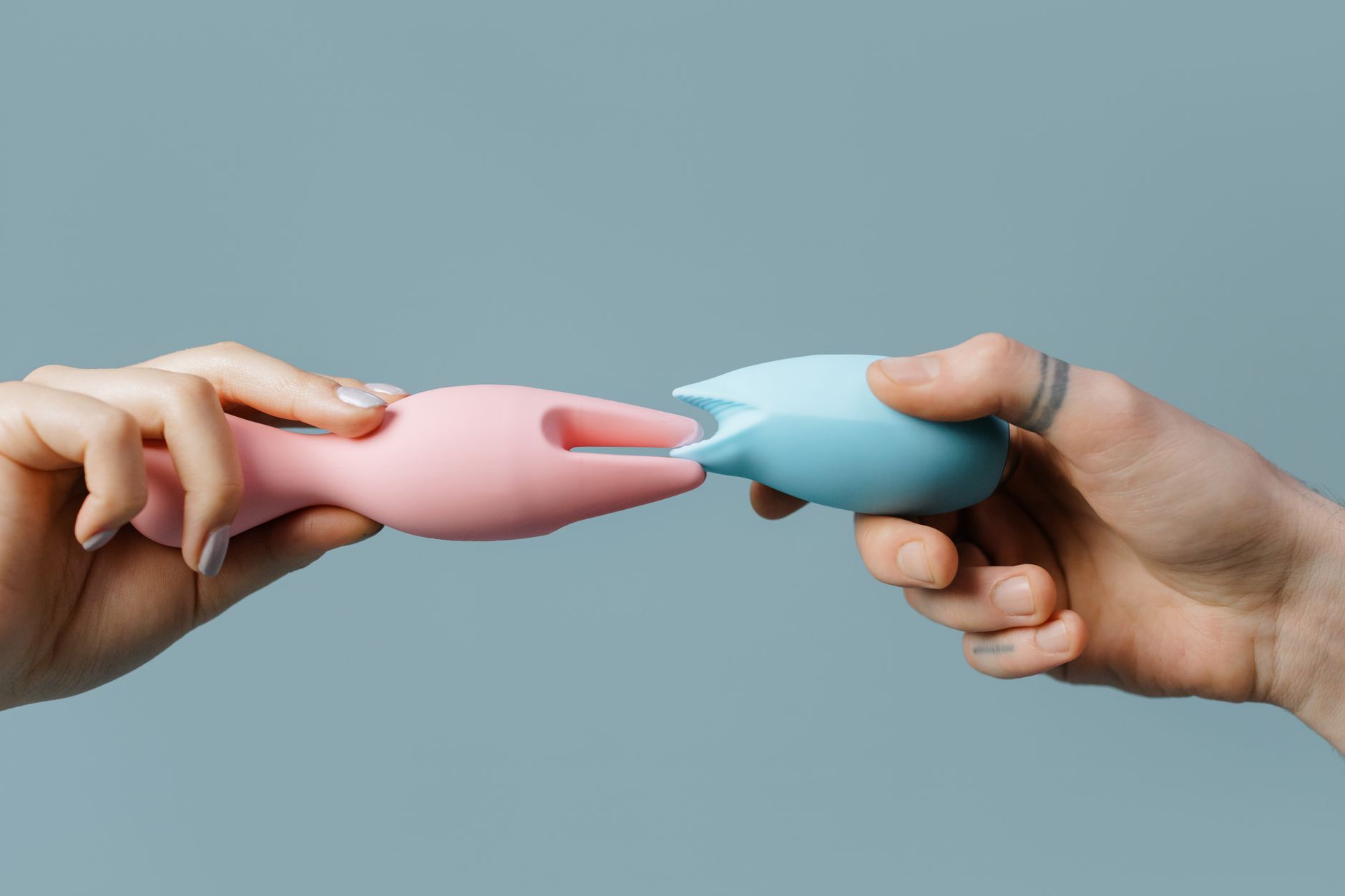
Here's what nobody tells you about your clitoris after 40
Your clitoris doesn't retire. It evolves. Between your 30s and your 50s, the way it responds to touch, how quickly it builds sensation, and what feels good shift in predictable ways. Most people experience this as loss. That's the frame we're sold. But it's actually a recalibration, and if you adjust your approach, it can feel like discovery instead.
I've worked with hundreds of people navigating this transition, and the pattern is always the same. They assume something's broken. Then they realize something's different. Then they find that different can be better.
Why clitoral sensitivity actually changes
Three physiological layers are shifting at midlife:
Hormone levels. Estrogen and testosterone both decline gradually (even before menopause). This changes blood flow to the clitoris and alters nerve sensitivity. The tissue can feel less responsive to direct touch initially, which feels like loss until you realize it's actually a threshold shift.
Skin thickness and hydration. The vulva's outer tissue becomes thinner and can dry faster. This sounds clinical and depressing, but what it means practically is that the same intensity that worked at 25 now feels sharp or uncomfortable. Lighter, broader stimulation works better.
Nerve patterning. Here's the good part. Over time, the neural pathways for pleasure actually become more refined. Your nervous system has spent 20+ years learning what it likes. That data lives in your brain and your nerve endings. You're not less sensitive. You're more discriminating.
What "less sensitive" actually means
Let me be specific, because this word gets misused. "Less sensitive" doesn't mean "less capable of pleasure." It means:
- Direct touch on the clitoris itself might feel too intense or raw
- Arousal takes longer to build (10-15 minutes instead of 3-5)
- The sensation has moved from sharp and surface-level to deeper and more distributed
- You need different patterns than you did at 30
Most people confuse point 1 with the others and assume the whole system is offline. It's not. It's recalibrated.
Why lemon clitoral vibrators work better during this shift
The Lem and similar clitoral vibrators use suction and pulsing, not direct friction. Here's why that matters during midlife:
Suction is gentler on thinned tissue. The suction mechanism stimulates the clitoris without the direct mechanical pressure of a traditional vibrator. For people with thinner, more sensitive tissue, this feels good instead of painful.
Suction reaches deeper nerves. Your clitoris has internal structures (the clitoral bulbs, the crura) that extend into your body. Suction stimulates these deeper structures in a way that fingertips or traditional vibrators don't. This often creates a more integrated, full-body sensation.
Pattern variety helps you find your new rhythm. A lemon vibrator typically has 5-10 different patterns. At midlife, your nervous system is pickier about what feels good. Having options means you're not stuck with one intensity or pattern. You can experiment.
It doesn't require genital fitness. If your pelvic floor is tense or your mobility has changed, a vibrator does the work. You're receiving sensation instead of chasing it.
How to actually use a lemon clitoral vibrator when your sensitivity has shifted
Four adjustments that make the biggest difference:
Start with the lowest setting and work up slowly. Not because you're fragile, but because you're learning your new threshold. What felt mild at 35 might feel intense at 45. Spend time on patterns 1 and 2. Boring? Good. Boring means sustainable. You can always increase later.
Apply the vibrator over your underwear or a thin layer first. The vulva's external tissue has changed. Buffering the sensation slightly can help you find the right intensity zone. Once you've warmed up, you can adjust.
Take 15-20 minutes for warm-up, not 5. This isn't a flaw. This is your actual arousal timeline now. Your clitoris needs time to fill with blood, your nervous system needs time to orient toward pleasure. Honor this timeline instead of fighting it. Many people find that longer warm-up creates more intense, longer-lasting orgasms.
Combine clitoral stimulation with internal sensation or movement. A lemon clitoral vibrator works beautifully on its own, but at midlife, many people find that adding a second point of stimulation (penetration, movement, touch elsewhere) deepens the whole experience. This is not compensation. This is sophistication.
The mindset piece matters as much as the technique
Here's where relationship coaching comes in. If you're using a lemon vibrator while believing your body is failing, the sensation will feel like failure. If you're using it while understanding that your body is evolving, the same sensation becomes information.
Your clitoris isn't less. It's different. And different, at this point in your life, often comes with more permission, more self-knowledge, and less performance anxiety. Many people report their most satisfying orgasms in their 40s and 50s, not despite the changes, but because of them.
Common patterns at midlife and what to do
"It feels numb compared to before." Your nerve endings haven't disappeared. The threshold has shifted. Try a lemon vibrator on pattern 3 or 4, where the sensation is strong but not sharp. Many people find this feels awakening rather than deadening.
"It feels too sensitive all of a sudden." This is often hormonal (progesterone peaks can cause this) or stress-related. Use the lowest setting, warm up longer, and consider whether something emotionally has shifted. Often it has.
"Orgasms feel different." They're usually more localized or distributed differently. This isn't wrong. It's data. Explore it. A lemon vibrator gives you enough control to map what's changed.
"I'm not interested anymore." This one usually isn't about the clitoris. It's about stress, relationship dynamics, or other life transitions. Using a clitoral vibrator on its own won't fix this. You might need to address partnership patterns or underlying exhaustion first. That's real work, but it's separate from the mechanics.
When to explore beyond the basics
If you're using a lemon vibrator correctly and still not feeling much, check three things:
Medications. Antidepressants, antihistamines, blood pressure meds, and some birth controls can flatten sensation. If you started something new in the past year or two, this might be the culprit. Talk to your doctor about timing or alternatives.
Pelvic floor tension. If your pelvic floor muscles are gripping, sensation gets muddled. Try breathing deeply during warm-up, or use Kegel releases (squeeze, then deliberately relax) to train the muscles to release. A pelvic floor physical therapist can assess this properly.
Relationship or emotional dynamics. If you can't focus, or if pleasure feels unsafe or wrong, that's your nervous system protecting you. Using a vibrator won't fix protection. Addressing the underlying dynamic will.
Questions people ask about this transition
Is clitoral sensitivity loss permanent? Not necessarily. Hormone fluctuations, stress, medications, and relationship changes all affect sensitivity. Sometimes it shifts back. Often it stabilizes at a new level. Using a lemon clitoral vibrator while these changes happen helps you stay engaged instead of checking out.
Should I try a different lemon vibrator design if one doesn't work? If the suction-based design isn't clicking, try exploring different patterns or intensities first. But yes, different tools work for different bodies. Some people prefer the Lem. Others prefer the Avocado or a different clitoral vibrator entirely. Your preference is valid data.
Can I use a lemon vibrator if I've never used one before? Absolutely. Midlife is actually a great time to start. You know yourself better. You know what you like. You're not figuring out desire from scratch. You're just adapting the map you already have.
Does hormonal therapy change clitoral sensitivity back? Sometimes. HRT can restore some of the previous sensation profile, but it doesn't take you backward in time. You'll still have midlife neurology. You'll just have different hormone levels. Some people find HRT helps. Others find their midlife body feels right even without it.
Is there a lemon sucker toy that's better for midlife clitori? The Lem and similar clitoral vibrators with multiple patterns are genuinely helpful because you can tune the intensity. But honestly, any tool is less important than patience and self-knowledge. Using the right tool with frustration beats using the perfect tool with frustration.
The real shift at midlife
Your clitoris doesn't stop working in your 40s or 50s. It stops performing the script you learned at 25. And most of the time, that's a relief. You're not trying to climax in five minutes while your partner watches. You're not trying to prove anything. You're trying to feel good, and often, that means slowing down, adjusting tools, and letting sensation be what it is rather than what you think it should be.
A lemon clitoral vibrator helps because it gives you control and variation. But the real tool is permission. Permission to adjust. Permission to take longer. Permission to let your body evolve without calling it failure. When you give yourself that, sensation usually follows.
If you're navigating this transition and it's affecting your relationship or your sense of self, that's also worth naming. This isn't just a solo experience. It's a life transition that might need conversation, adjustment, or outside support. That's what I'm here for. Reach out if you want to talk through the relational pieces of this shift.