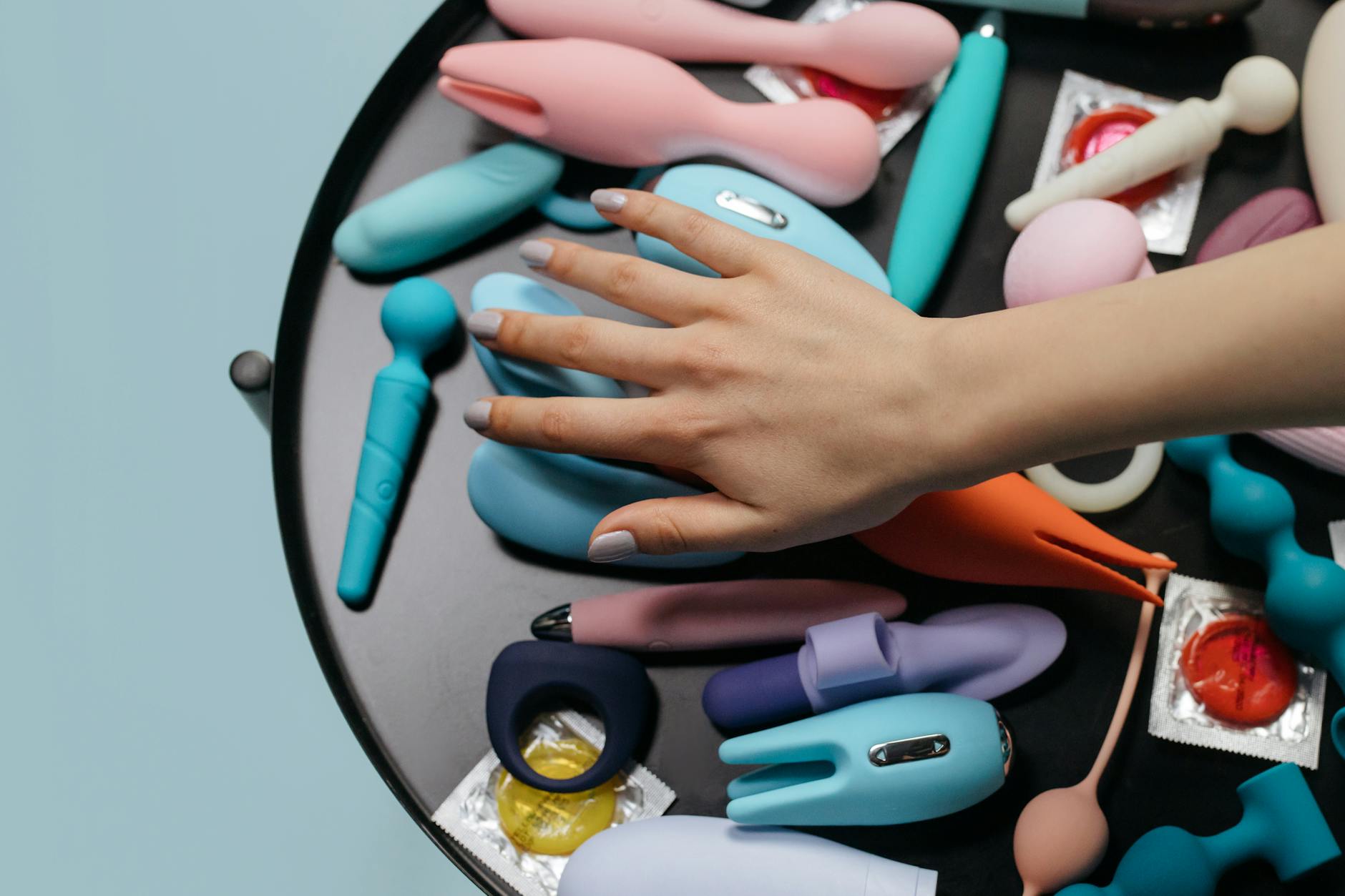
Let's be real about the tension
Your partner brings it up. Maybe they ask directly. Maybe they send you a link. Maybe they suggest it during sex and your stomach drops because suddenly this thing you weren't expecting is happening right now. Your instinct is probably some mix of: I should want this, what does this mean about us, am I not enough, and also I don't want to kill the mood by saying no.
Then you shut down a little. Not dramatically. Just enough that they notice. And now you're both stuck in a familiar pattern. They feel rejected. You feel pressured. The conversation that could have been about shared pleasure becomes about what you're both afraid to say.
Here's what I've seen work in couples therapy over and over: the hesitation isn't the problem. The silence is.
Why the nervousness makes total sense
Introducing toys to partnered sex isn't like buying a new kitchen appliance. It touches something primal. If your partner wants a vibrator, your brain might go to: Am I not enough? Does this mean they're not satisfied? Why do they need something external when they have me?
Those aren't crazy thoughts. They're signals that you're worried about your role, your adequacy, or what this might mean for your relationship. That deserves real consideration, not dismissal.
The other layer: many of us were raised to believe that sex should be this organic, two-person thing. Adding a toy can feel like admitting that sex isn't naturally working, or like you're bringing in a third party (which, neurologically, you kind of are). If you grew up thinking good sex should just happen without tools or communication, then introducing a lemon clitoral vibrator or any other device can feel like failure.
It's not. It's actually the opposite. Using tools together is how you get to know each other better.
The conversation before the toy
Don't start with the vibrator. Start with curiosity.
When your partner brings it up, resist the urge to say yes to avoid the moment or no to shut it down. Instead ask: "What are you hoping will happen if we use one? What would it do for you, for us?"
This sounds simple. It's genuinely one of the hardest questions to answer, because most people haven't thought that far. They just know they're curious or they've seen one online or their friend recommended it. But pressing gently into their actual desire is how you move from panic to partnership.
Listening to the answer matters more than what you say next. Your partner might say: "I want to see you enjoy yourself more," or "I'm curious what it would feel like," or "I've fantasized about it." All of these are different. Each one tells you something about what's actually happening beneath the surface request.
Then tell them the truth about your hesitation. Not "I don't know," but something like: "I'm worried this means I'm not enough" or "I feel a little insecure about it." Name the actual feeling. Most people soften when you do this. They realize it's not a rejection of them. It's a fear about yourself.
Why the Lemon Vibrator is actually good for this
If you're going to try something, the design matters. Clitoral vibrators like the lemon sucker or similar air-suction tools feel different from what traditional partnered sex provides. They're not replacing penetration. They're adding something entirely separate.
That distinction is important psychologically. When your partner watches you use a vibrator on yourself, it's not threatening because it's not mimicking what they already do. It's its own experience. They get to be present for your pleasure without feeling like they're being replaced.
The lemon clitoral vibrator also has a learning curve. You have to figure out the patterns, the intensity levels, how your body responds. That learning process is something you can do together, or at least with them present and curious rather than you both pretending it's interchangeable with what came before.
How to actually introduce it together
Start alone first. This might feel counterintuitive, but using a clitoral vibrator by yourself gives you permission to enjoy it without performing for anyone or worrying about being watched. You get to find the patterns that work. You get to come if you're going to come. You get to just be curious.
Then, when you're ready, tell your partner: "I tried it. I want to show you what it's like." Showing, not explaining, changes the power dynamic completely.
When you're together, the tone matters hugely. This isn't a fix for anything. Frame it as exploration, not problem-solving. "I want to find new ways to feel pleasure together" is different from "I need this to actually come."
Start with him or her watching, not participating. Just present. Let yourself enjoy the toy without performing, but also without shame. This is the vulnerable part. You're letting someone see you receive pleasure in a new way. That's real intimacy, even though it might feel strange at first.
After a few times, when you're comfortable, your partner can incorporate touch alongside the vibrator. They can touch your breasts, kiss your neck, hold you. The vibrator isn't replacing them. It's giving your nervous system something different while they're giving you something else.
The insecurity conversation (you need this one)
At some point, usually after the second or third time, check in directly. Ask your partner: "How does this feel for you? Are you okay?" and "What do you want from this?"
Many partners feel awkward watching without doing anything. They might feel excluded or emasculated or just uncomfortable with the silence. That's real and worth naming. They might also feel relief that they get to stop performing and just be present.
Your job is to tell them directly: "This doesn't change how I feel about you or about what we do together. This is something new we're adding because we both want to explore." Then mean it. If you don't mean it, that's the real conversation to have first.
Some couples find that using a lemon vibrator together actually deepens their sex life because they're finally talking about what they actually want instead of what they think they're supposed to want. Others find it's not their thing and that's okay too. The goal is honesty, not compliance.
When your partner's pushing and you're still not ready
If they keep asking and you keep saying no, or you say yes but you're doing it to appease them, that's a different problem. That's about boundaries and whether you both respect each other's comfort level.
You're allowed to say no. You're allowed to say "not yet." You're allowed to say "maybe if we talk to someone about why this feels so loaded for me." That last one, by the way, is exactly what a couples therapist can help with. This vulnerability around desire and adequacy touches something deep. It's worth exploring with help.
What you can't do is say yes and then resent them for asking, or say no and then expect them to never mention it again. Relationships require actual conversation, especially about sex.
The bigger picture
Introducing toys to your sex life isn't really about the toy. It's about whether you and your partner can want different things, ask for them, listen without ego, and explore together. Those skills transfer everywhere.
If you can navigate this conversation about a lemon vibrator with honesty and curiosity, you're actually building something really valuable. You're learning to want out loud. You're learning that your partner's desires don't threaten yours. You're learning that asking for what you want doesn't make you needy or demanding.
That's the kind of partnership that lasts.
People also ask
What if I use a vibrator and my partner thinks they're not good enough anymore?
This fear is common but usually backwards. A vibrator isn't competition. It's a tool that does one thing very specifically. Your partner does dozens of things. The vibrator can't hold you, talk to you, or make you feel emotionally safe. Those are all them. Start by using it together so they see it's not replacing anything. Then talk about the fear directly instead of letting it sit quietly between you.
How do I bring up that I want to use a Lemon vibrator if my partner hasn't mentioned toys?
Use the same framework in reverse. Pick a calm moment outside of sex. Say something like: "I've been curious about exploring something new in our sex life. Can we talk about that?" Then describe what you're curious about and why. Maybe you want more intense orgasms. Maybe you've been fantasizing about it. Maybe you just want to shake things up. The reason matters because it gives your partner context instead of leaving them to make assumptions.
Is it normal to feel embarrassed using a vibrator in front of my partner?
Completely normal. You're literally baring yourself in a new way. That vulnerability can feel awkward until it doesn't. Most couples who stick with it find that the awkwardness fades after two or three times because they realize nothing bad happened. Their partner didn't laugh. They didn't feel rejected. They just got to see someone they love enjoy themselves. That's actually very intimate.
Can using a vibrator during partnered sex make me less sensitive over time?
No. Your sensitivity isn't like a battery that drains. Clitoral pleasure is neurological, not mechanical. Using a lemon sucker or similar vibrator regularly doesn't numb you to other sensation. In fact, many people find that understanding their body better through solo play with a vibrator makes them more responsive with partners because they know what feels good.
What if we try it and it kills the mood?
Then you pause, check in, and try again another time. Nothing ruins the mood faster than pressure to perform or anxiety that you're doing it wrong. If it's not working, the conversation is: "This was interesting but let's try something different next time," not "Well that failed." Exploration requires permission to not be perfect.
How do I know if my hesitation is a real boundary or just nervousness?
A boundary is something you need to feel safe and respected. Nervousness usually softens with information and experience. Ask yourself: If my partner fully understood my hesitation and we addressed it, would I still not want this? Or am I just anxious about the unknown? Real boundaries deserve respect. Nervousness deserves curiosity and patience. Most hesitation about toys is a mix of both, so treat it that way.
What comes next
Introducing toys to a relationship is a small act that says something big: I want to know you better, and I want you to know me better. I'm willing to feel awkward in service of that. I trust you with my pleasure.
If that conversation feels too vulnerable right now, that might be the real thing to explore first. Not the vibrator. The relationship. And that's fine. Reach out if you want to talk through it with someone who specializes in exactly this kind of transition.