
When your body feels like it's watching from three feet away
Let's be real. Sometimes during sex, your body shows up but you don't. You're there mechanically, aware of what's happening, but disconnected from it. No sensation landing where it should. Your mind narrating the scene instead of being in it. That's dissociation, and it's weirdly common.
It happens after trauma. It happens during stress. It happens when you're in your head about how you look, or whether your partner is satisfied, or a dozen other things that have nothing to do with your actual pleasure. The result is the same: pleasure feels like it's happening to someone else.
A lemon vibrator doesn't fix the underlying cause (that might need a therapist). But it does something crucial: it gives your nervous system a reason to come back.
Why dissociation kills pleasure in the first place
Your clitoris has around 8,000 nerve endings. When you're fully present, those nerves fire in a coordinated chain reaction. Your brain pays attention. Sensation builds. But dissociation interrupts that chain.
When you're disconnected, your nervous system is running a different program. It's in survival mode or protective mode. Your body isn't refusing sensation. It's not receiving it. The nerves are there. The capacity is there. But the signal isn't getting through.
This is where intensity becomes your tool. Not roughness. Intensity. A good lemon clitoral vibrator delivers sensation that's hard to ignore. The suction pattern, the rhythm, the way it stimulates without requiring friction. Your nervous system notices. The chain reaction restarts.
How a clitoral vibrator brings you back to your body
Three reasons a lemon vibrator works when dissociation shows up:
1. Interruption through novelty. Your dissociative pattern is practiced. Your brain knows how to leave. But suction is different from what your mind expects. It's novel enough that your nervous system has to pay attention.
2. Intensity without pain. You need sensation strong enough to break through the fog, but not so rough that it triggers more dissociation. Suction gives you power without harshness. The rhythm is consistent but not boring.
3. Focused sensation. Dissociation is easier when stimulation is diffuse. When you can't quite locate where you're feeling it. A lemon vibrator pinpoints sensation right where your body can't ignore it. Your brain follows.
The reconnection protocol
If you want to use a lemon vibrator to come back to your body, structure matters.
Start grounded. Before you touch the vibrator to your skin, take a full minute just holding it. Feel the weight. Notice the material. This sounds basic, but you're signaling to your nervous system that something's happening. You're the one making the choice.
Build slowly on purpose. Press the vibrator to your inner thigh, not on your clitoris yet. Let the sensation travel. Your nervous system needs to recognize the input before you escalate. Spend three to five minutes here. No rushing.
Move to the clitoris when you notice a shift. You're not looking for arousal. You're looking for presence. The moment you think, "Oh, I feel that," that's the moment to move contact to your clitoris directly. Start at pattern one or two. Your only job is noticing sensation.
Stay with one pattern for minutes, not seconds. Dissociation loves when you're restless and searching. Commit to one rhythm. Let your body adjust. Your nervous system needs time to trust that the sensation is safe and real.
If your mind drifts, anchor to the feeling, not the fantasy. Porn, your partner, elaborate scenarios. All of those make dissociation easier because they pull your attention away from what's actually happening in your body. When your mind wanders (it will), bring it back to the physical sensation. Not as a judgment. Just a gentle return.
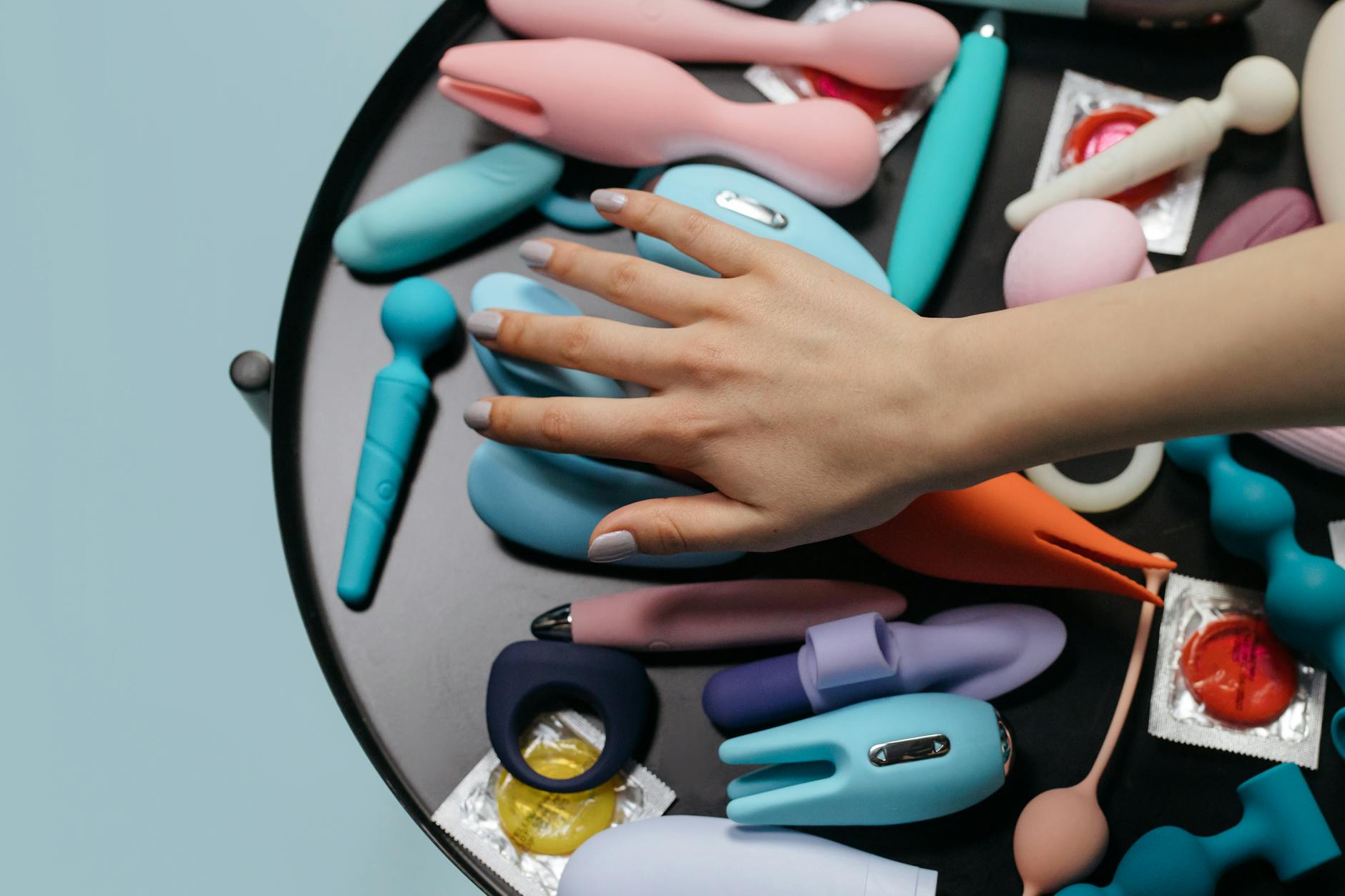
Photo by cottonbro studio on Pexels
Making it work with a partner
If you're with someone, dissociation during partnered sex creates a particular kind of loneliness. You're physically intimate but emotionally absent. They feel it. You feel guilty. The disconnect deepens.
A lemon vibrator can be part of rebuilding this, but only if you separate two conversations. First, you need solo time to reconnect with your own body. Not as preparation for partnered sex. As its own thing. Give yourself two or three sessions solo where your only goal is noticing sensation. No orgasm required. No performance involved.
Then, when you bring the vibrator into partnered play, you're not asking your body to do two jobs at once (stay present with your partner AND manage the dissociation). You're bringing a tool that's already helping you come back.
Your partner can hold the vibrator, or you can. Either way, the rule is the same: their job is not to make you come. Their job is to be present while you practice being present. If you need to close your eyes. If you need quiet. If you need to pause. None of that is rejection.
When to pause and seek support
A vibrator is a tool for reconnection, not a treatment for trauma. If your dissociation is tied to past sexual abuse, assault, or ongoing relational harm, a lemon vibrator might not be enough. You might need a trauma-informed therapist or somatic practitioner first.
Some signs it's time to get professional support: if touching your own body triggers panic, if you can't stay present for even two minutes, if the disconnection is spreading to non-sexual moments, or if trying to reconnect actually intensifies the dissociation.
That's not failure. That's useful information. Your body is telling you it needs a different kind of help.
The neuroscience part you probably care about
Your brain has a part called the insula. It processes sensations from your body and tells your conscious mind what you're feeling. Dissociation basically means the insula is offline. Sensation is happening, but the message isn't reaching your awareness.
Intense stimulation wakes the insula back up. Not through force. Through novelty and intensity that makes the nervous system say, "Okay, I need to pay attention to this." A quality lemon clitoral vibrator is designed with this in mind. The suction pattern, the pulse, the direct contact. It's intentional stimulation.
Over time, as you practice with the vibrator and successfully reconnect, your nervous system rewires. You build a new pathway where sensation equals safety equals presence. It doesn't happen overnight. But it happens.
The patience part
Honestly, the biggest mistake people make is expecting instant results. You've been dissociating for weeks or months or years. Your nervous system has gotten really good at leaving. A vibrator doesn't reprogram that in one session.
If you're using a lemon vibrator to reconnect with your body, commit to at least four or five solo sessions. Journal after each one. What did you notice? Where did your mind go? When did you feel most present? You're gathering data about your own patterns.
There's no finish line here. There's just practice. Each time you use the vibrator with presence and intention, you're telling your nervous system: "It's safe to be here. You don't need to leave."
And the longer you practice that message, the more your body believes it.
People also ask
Can dissociation during sex be permanent?
No. Dissociation is a response pattern, not a permanent state. Your brain learned to leave as a protection mechanism. It can learn to stay. This usually requires both nervous system regulation tools (like what a lemon vibrator provides) and often some therapeutic support to address what triggered the dissociation in the first place. If dissociation is trauma-related, working with a trauma-informed therapist alongside self-pleasure practices gives you the fastest path back to presence.
Is it normal to feel more dissociated when using a vibrator at first?
Yes, sometimes. If you're using intensity as a way to numb rather than to reconnect, a vibrator can feel like another way to leave your body. The difference is intention. If you're trying to feel nothing, intensity will help you achieve that. If you're trying to feel everything, it's a different practice entirely. Slow down, stay curious about sensation rather than outcome-focused, and if dissociation increases, that's a sign to pause and possibly seek support.
Does this work if I have trauma-related dissociation?
Partially, but likely not fully on its own. A lemon vibrator is a great tool for nervous system regulation and reconnection, but trauma-related dissociation usually needs therapeutic intervention. A trauma-informed therapist or somatic practitioner can help you work through the root cause while a vibrator helps with the day-to-day practice of staying present. Think of them as complementary tools, not alternatives.
How long does it take to reconnect with your body?
It depends on how long you've been disconnected and what caused it. Some people notice a shift in two or three sessions. Others need weeks. The key is consistency, not duration. Using a lemon clitoral vibrator twice a week with full presence will work faster than occasional sessions where you're still in your head. Your nervous system responds to repetition and safety, not to intensity alone.
Can I use a lemon vibrator if I have numbness or low sensation?
Absolutely. This is actually where a lemon vibrator shines. If you're not feeling much, the intensity of suction-based stimulation often breaks through where gentler touch doesn't. Start at lower patterns and work up. Your sensation might return gradually as your nervous system realizes it's safe to feel. If numbness is medication-related, a vibrator can help compensate, though you might also want to talk with your prescriber about timing or dosage.
What if my partner wants to help me reconnect but I'm not sure how to ask?
Start with something like this: "I want to feel more present during sex, and I'm learning what helps. For now, I'd like some solo time with [a lemon vibrator / my body] to practice reconnecting. Then maybe we can explore together." You're being clear about what you need without blame. Your partner's job is to support your reconnection, not to fix you. If they can't respect that boundary, that's information about the relationship that matters separately from the dissociation itself.
Here's what actually matters
Your body is not broken. Dissociation is a protective mechanism that made sense at some point. A lemon vibrator doesn't override that protection. It offers your nervous system something better: consistent, intense, safe sensation that builds trust.
Every time you use a vibrator and successfully stay present, you're writing a new message to your nervous system. You're saying: "This is safe. You can stay. Pleasure is available to you."
That message, repeated over weeks, rewires how your body responds. Not through force. Through practice and permission.
Your pleasure matters. Your presence in your own body matters. A tool like a lemon clitoral vibrator is just that. A tool. But in the right hands—your hands, with intention—it becomes the bridge back to yourself.