Let's name what's actually happening
You got a new job. Congratulations. You also haven't had sex in three weeks because you're collapsing into bed at 9 p.m. and your brain is still running through tomorrow's agenda at midnight. Your partner has started asking questions. You feel guilty. You're wondering if you've broken something.
You haven't. Career transitions are one of the most reliable libido killers out there. Not because there's anything wrong with your capacity for pleasure, but because your nervous system is in a state of controlled panic. New workplace, new hierarchy, new stakes. Your body is running on cortisol. Desire lives somewhere underneath that, waiting.
Why work stress specifically demolishes your sex drive
It's not random. Three things happen when you start a demanding new role.
First, your brain is in scanning mode. You're reading microexpressions, power dynamics, unwritten rules. That hypervigilance is exhausting. By 6 p.m., you've made a thousand tiny social calculations and your frontal lobe is fried. Sex requires the opposite state. You need to be able to zone out, to trust your environment. When your brain is still doing threat assessment, arousal can't land.
Second, your cortisol is elevated for most of the day. Cortisol and testosterone compete for the same neurological space. High sustained stress = lower desire, especially in the first 3-6 months of a new position. This is temporary, but it feels permanent when you're living through it.
Third, you have no mental energy left for the anticipatory part of sex. Desire often starts in the brain before the body catches up. When your brain is empty, so is your libido.
This is completely fixable. But it requires a different approach than you might normally use.
Why clitoral vibrators help when you're depleted
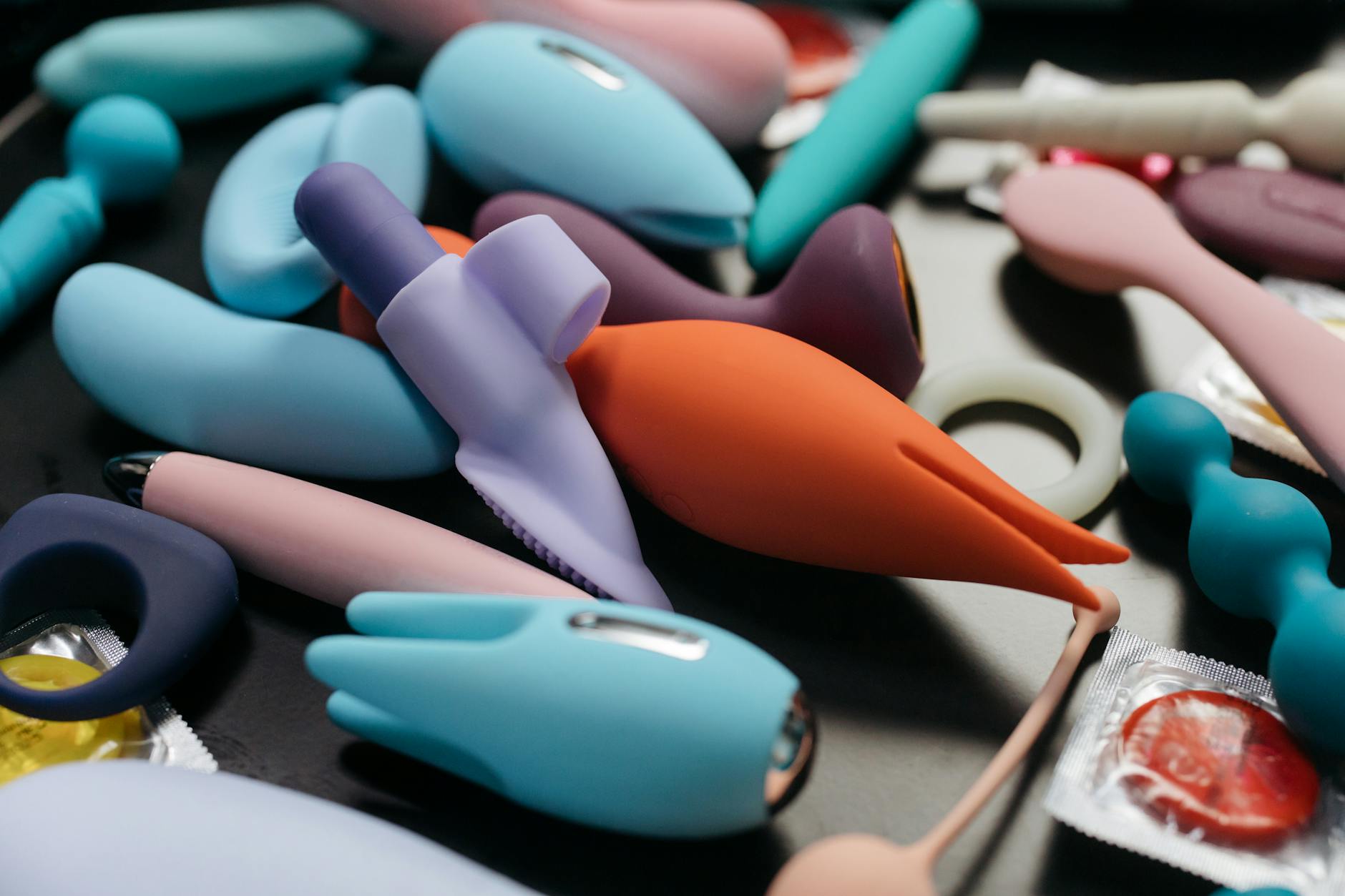
Here's the thing about lemon vibrators and other clitoral suction toys. They don't require you to generate arousal. They create it.
Traditional vibrators ask your body to respond to stimulation. You have to be in some baseline state of readiness. When you're burned out from a new job, that readiness isn't there. A clitoral vibrator like the Lem works differently. The suction pattern stimulates nerve endings directly without needing you to be "in the mood" first. You can start at zero arousal and your body will respond. Pleasure happens, then desire follows. It's the opposite direction from what you're used to, and it's exactly what you need right now.
Lemon clitoral vibrators are especially effective because the design is less intense than traditional vibrators. When your nervous system is already overstimulated by work stress, you don't want violent buzzing. You want a precise, rhythmic sensation that your body can trust. Suction technology delivers that. It feels like a different category of touch entirely.
The practical setup: making it actually happen
Let's be real. You're tired. You're not going to light candles and create an eight-step seduction ritual. Here's what actually works.
Schedule it like a meeting. Not in a romantic-kill-joy way. In a "your pleasure matters and deserves real time" way. Sunday night, 8 p.m., before the work week spiral begins. Or Saturday morning, before the weekend chaos. Twenty minutes. That's it. One session a week when you're transitioning into a new role. Not a performance obligation. A permission slip.
Use it right before sleep, not as foreplay. When you're depleted, trying to build toward partnered sex is adding pressure you don't need. Use a clitoral vibrator solo, on your own schedule, without the expectation of going somewhere with it. Orgasm, no orgasm. Doesn't matter. The point is recalibrating your nervous system away from work stress. Once you've done that a few times a week, desire for partnered sex naturally comes back.
Keep it in your actual bedroom. Not hidden. Visible. On the nightstand. This sounds like a small thing but it's powerful. When it's right there, you're more likely to use it. Reaching for a Lem takes five seconds. Reaching for a partner or scheduling conversation takes way more energy when you're running on fumes.
Set a ten-minute timer if you need permission to stop. Some nights you'll use it for two minutes and feel done. Some nights you'll want twenty. When you're exhausted, giving yourself a time boundary actually frees you up. You're not "supposed" to do anything. You're checking in with what your body wants, and that answer can change.
Reframing sex while you're in transition mode
Here's where the real shift happens. During a high-stress work transition, you probably think of sex as something you should be doing for your partner or for your relationship. That's making it another obligation.
Flip it. During this phase, sex is purely for you. It's nervous system regulation. It's reclaiming your own capacity for pleasure when work is trying to take it. That's not selfish. That's the opposite. Your partner benefits too. A version of you who has reclaimed their pleasure is infinitely more resourced for partnered intimacy than a version of you who's white-knuckling through guilt.
If you have a partner, tell them what's happening. Not to avoid sex. To name the real story. "My nervous system is in overdrive from the new job. I need to spend a few weeks recalibrating solo, with a tool that doesn't ask me to be in the mood. I'll come back to partnered sex when I'm not running on empty." Most partners get it immediately. The ones who don't are revealing something useful about how they think about your pleasure, and that's information you need anyway.
The timeline for your libido to come back
Most people feel their baseline arousal returning 6-8 weeks into a new role, assuming it's settling down. Some take longer. Some less. But the pattern is consistent. Your desire doesn't come back because you force it. It comes back because you stop trying so hard and let your body metabolize the stress.
Using a clitoral vibrator like the Lem weekly during this window actually speeds that process. You're giving your nervous system regular proof that pleasure still exists, that your body still works, that this isn't permanent. You're also releasing oxytocin and dopamine, which are the literal neurochemistry of resilience.
By week eight, you'll probably notice you're initiating sex with your partner again. You'll feel that familiar tug of desire in moments you weren't expecting it. That's the signal that your nervous system is coming back online.
What to do if your energy doesn't come back
If you're three months into the new role and your libido is still completely absent, something else might be going on. New-job stress typically doesn't tank desire this permanently. If it has, it's worth asking some bigger questions.
Are you sleeping? If not, that's the first fix. No amount of clitoral vibrator work will restore desire if your nervous system is sleep-deprived. Sleep comes first.
Are you actually okay with the job? Sometimes low libido is your body's way of saying something feels wrong about the situation itself. Not the workload. The fit. The values. The people. When your body's not interested in pleasure, sometimes it's worth listening to why.
Have you talked to your doctor? Prolonged stress can affect thyroid function and other markers that do tank libido. A simple blood test can rule that out.
But in most cases, you're exactly where you should be. Your nervous system is recalibrating. Your desire is waiting. And a few intentional sessions with a lemon clitoral vibrator every week is genuinely one of the fastest ways to wake it back up.
FAQ: Using Clitoral Vibrators During Work Transitions
How often should I use a lemon vibrator when I'm stressed from a new job?
Start with once or twice a week. This is regular enough to signal to your nervous system that pleasure is still accessible, but not so frequent that it becomes another obligation. If you find you want more, that's your body telling you it's hungry for this. Listen to it. Once things settle at work, your natural frequency will probably shift.
Can I use a lemon clitoral vibrator if I don't want an orgasm?
Completely. In fact, when you're burned out, you might want to use it without orgasm as the goal. Some nights you'll come. Some nights you'll just feel sensation and pleasure without that endpoint. Both count. Both are recalibrating your nervous system. The goal isn't performance. It's reclaiming your body's capacity to feel good.
Will using a clitoral vibrator alone make my partner feel rejected?
Not if you communicate. "I'm using this for my own nervous system regulation because my job is eating my brain" is a very different statement than "I don't want sex with you." One is about you needing to metabolize stress. The other is about rejection. Most partners appreciate the honesty and actually feel relieved when you name it. You're taking responsibility for your own pleasure instead of making it their job to fix your libido.
Should I tell my partner I'm using a vibrator, or is this private?
That's entirely your call. There's no rule. Some people tell. Some people keep it private. The only real requirement is that you're not hiding it because you feel shame about your own pleasure. If you want to tell them and you're hesitating because of shame, that's worth examining. If you want to keep it private and you're doing it joyfully, that's fine too.
How do I know when my libido is coming back?
You'll feel it before you notice a pattern. One day you'll think about sex and feel a tug of actual interest, not obligatory interest. That moment will probably surprise you. It might be weeks before it happens consistently. But that first moment when your body spontaneously wants something sexual? That's the signal. Your nervous system is coming back online.
Can stress from a new job permanently damage my sex drive?
No. Your capacity for pleasure is still there. It's just temporarily offline because your nervous system is in protection mode. Once the job feels less novel and your cortisol levels normalize (usually 6-12 weeks in), your baseline arousal comes back naturally. Using clitoral vibrators during the interim speeds that process because you're maintaining that neural pathway even while you're stressed.
The bottom line
A new job is a legitimate stressor. Your libido tanking is not a personal failure. It's your nervous system doing exactly what it's supposed to do. The faster you can metabolize that stress and recalibrate toward pleasure, the faster desire returns.
Lemon clitoral vibrators are tools designed for exactly this moment. They don't require you to be in the mood. They create the conditions for pleasure even when your brain is somewhere else. A few intentional sessions a week, without expectation or performance pressure, can genuinely speed your return to baseline arousal.
Your pleasure matters. It matters enough to schedule. It matters enough to prioritize while you're navigating a major transition. And it comes back faster than you think when you give it real, consistent attention.
If you're ready to reclaim that part of yourself, we're here. Start exploring how clitoral vibrators work for your body.