The weeks when sex sounds like a chore
Let's be real. There are weeks when the thought of being touched feels about as appealing as a root canal. Your body isn't broken. Your relationship isn't in trouble. Your cycle just shifted your neurochemistry so dramatically that desire flatlined, and now you're staring at your partner wondering why sex was even a thing you wanted to begin with.
This is one of the least talked about parts of having a menstrual cycle. We hear plenty about ovulation surges and horny energy, but the weeks when you'd honestly prefer a sandwich to sex? That gets glossed over or treated like something to "work through." It's not. It's physiology. And it's worth understanding so you can stay connected to your own pleasure without guilt or frustration.
What your cycle actually does to desire
Your libido doesn't fluctuate because you're moody or broken. It fluctuates because your brain chemistry is literally different across the month. During the follicular phase, estrogen climbs steadily, which increases dopamine and norepinephrine. These are the chemicals that make you feel more approach-motivated, more social, more interested in novelty and risk. This is your body's natural setup for the ovulation surge.
But here's what most people skip: the luteal phase (especially the week before your period) is when progesterone peaks and estrogen dips. Progesterone is neurologically the opposite of dopamine. It's calming, inward-focused, and risk-averse. Your brain literally wants less external stimulation. Sex stops feeling like an exciting novelty and starts feeling like... a lot. Someone else's needs. Performance pressure. Physical intensity.
This is not laziness. This is not disinterest in your partner. This is your nervous system doing exactly what it evolved to do.
The difference between low desire and no arousal
Here's where it gets interesting. Low desire ("I don't want sex") and difficulty with arousal ("I tried but my body won't respond") are not the same thing. During the luteal phase, you might have one, both, or neither.
Some people find that while their desire drops, arousal still works fine if they get out of their own head. They just need to lower their expectation bar. Instead of "I'm going to have amazing sex," it becomes "I'm going to spend ten minutes with my lemon vibrator and see what happens." No pressure. No performance. No partner's timeline.
Other people find that both desire and arousal tank together. Touching yourself feels boring. Nothing works. This is equally valid and equally workable. It just requires a different approach.
Why a lemon vibrator works better during these weeks
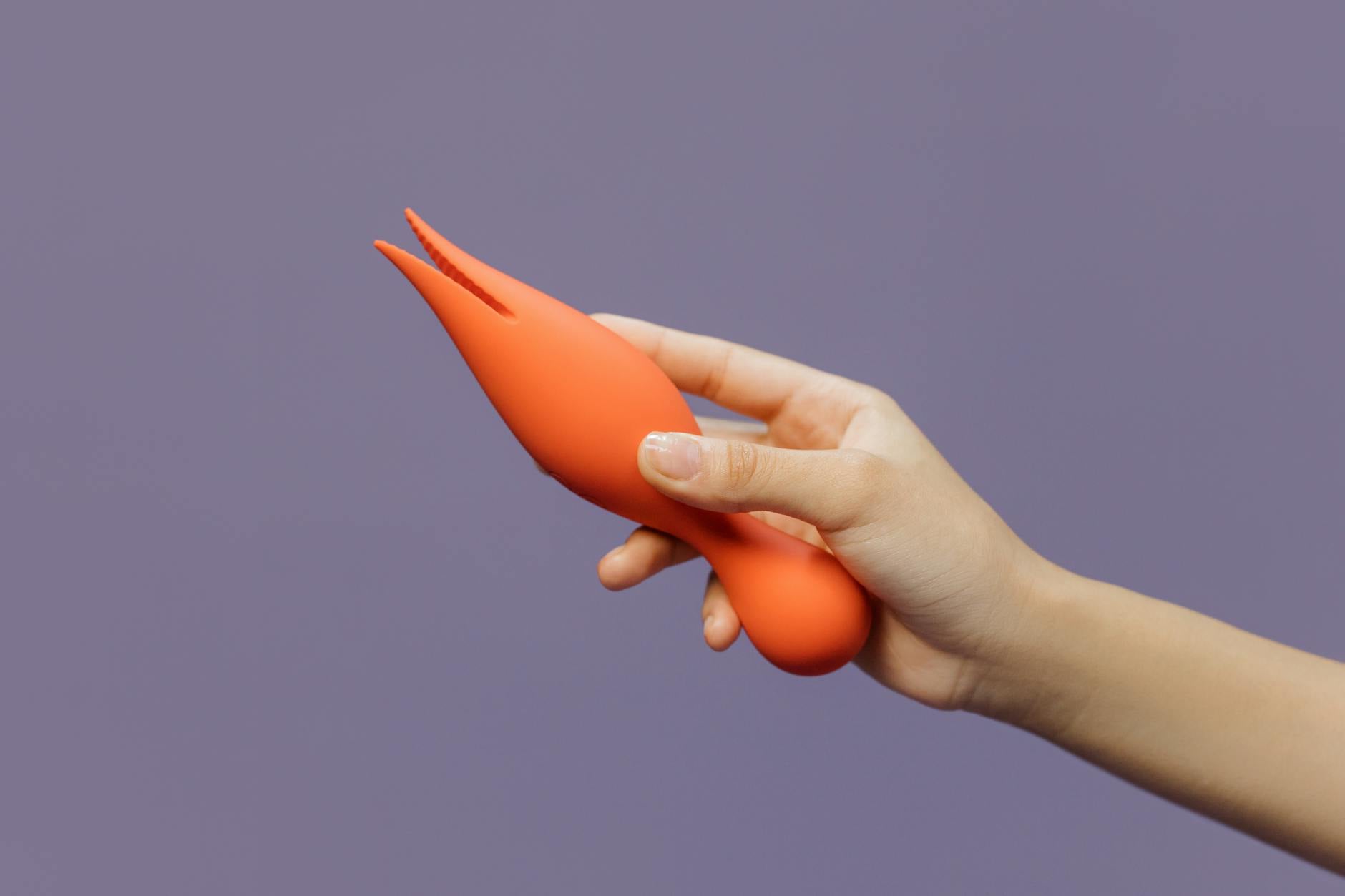
The reason air-suction devices like the lemon clitoral vibrator are particularly useful when your cycle tanks your desire is that they require less from you mentally. A lemon vibrator doesn't ask you to build arousal gradually. You press it against your clitoris, the stimulation is immediate and distinct, and your body responds because of the sheer specificity of the sensation. It's not subtle. It doesn't require you to already be halfway there.
This matters when your brain is telling you not to want sex but your body might surprise you. Many people find that once they activate their nervous system with a device like the lem vibrator, desire follows. It's not forced. It's not performing for anyone. It's just your body's natural response to direct, intentional stimulation.
You're not trying to feel sexy. You're not trying to want your partner. You're just using a tool designed to feel good and letting your cycle do what it does.
The practical approach for low-desire weeks
If you're using a lemon vibrator during a week when your libido is underground, here are the things that actually help.
First, change your environment. Don't try to have pleasure while sitting exactly where you've been stressed all day. Move to your bed or a chair you don't use for work. Light matters too. Dim or warm light signals to your nervous system that this is a different context from your regular day.
Second, lower your expectation to something absurdly small. Not "I'm going to come." Not "I'm going to feel amazing." Try "I'm going to spend seven minutes and notice what happens." That's it. You're not trying to achieve anything. You're just observing.
Third, pair it with sensation you do want. If touching feels like too much, a lemon vibrator handles the physical input while you focus on something else. Music. A fantasy that interests you without pressure. Your breath. Sometimes the barrier to pleasure during low-desire weeks is just that you need external stimulation to bypass the mental resistance.
Finally, notice the difference between "I don't want this" and "I'm nervous about wanting this." Anxiety masquerades as low desire all the time. You might feel like you don't want sex when what you actually don't want is the performance aspect or the vulnerability. A lemon vibrator in a private space removes some of that friction. You get to choose exactly how intense it is, exactly when you stop, exactly what happens next.
What actually changes when you use a lemon vibrator through your cycle
Here's what I've observed with clients who stay consistent with their lemon clitoral vibrator across different cycle phases. During the follicular phase when desire is high, they use it more often and with more intensity. Patterns 4 and 5 instead of pattern 1. They're more likely to pair it with external stimulation or partner involvement.
During the luteal phase when desire crashes, they use it differently. Shorter sessions. Gentler patterns. More focus on the sensation itself than on achieving orgasm. But they use it. And the pattern that emerges is that they stay connected to their own pleasure even when their cycle has made partnered sex unappealing.
That consistency matters. Your nervous system starts to recognize that pleasure isn't seasonal. It doesn't disappear for two weeks a month. It just looks different. A lemon vibrator becomes less about "getting off" and more about "staying in relationship with my own body across my whole cycle."
The conversation with your partner about cycle changes
If you have a partner, this is worth naming directly. Not as "my cycle kills my desire," but as "my cycle shifts what I want and when, and I'm going to honor that." Some partners will understand this immediately. Others will hear it as rejection.
The separation that matters is this. Your low desire during the luteal phase is not about them. But it's also not your job to override your cycle to keep them happy. The middle ground is often solo exploration with a lemon vibrator on the weeks your cycle shifts your interest. This keeps you connected to pleasure without the pressure of partnership.
You might also discover that using a lemon vibrator solo during low-desire weeks actually makes partnered sex more sustainable during high-desire weeks. You're not burning through your entire libido with a partner. You're distributing it across your cycle in a way that doesn't require you to always be available.
When to suspect something beyond your cycle
There's a difference between normal luteal phase low desire and actually something's wrong. If your low-desire weeks are lasting three weeks instead of one. If they're accompanied by pain, exhaustion so profound you can barely function, or depression that feels different from normal mood shifts. If they started suddenly after years of normal cycles. These are reasons to talk to a gynecologist.
PMDD (Premenstrual Dysphoric Disorder), thyroid issues, hormonal birth control side effects, and depression can all masquerade as "just my cycle." A good doctor can help you figure out which is which. Until then, a lemon vibrator is still useful. But it's not a substitute for medical care if something feels actually off.
The freedom that comes with understanding your pattern
Here's what changes when you stop fighting your cycle and instead work with it. You stop feeling broken during the luteal phase. You stop trying to manufacture desire that isn't there. And you stop requiring every week to look the same sexually.
Your pleasure becomes cyclical instead of constant. A lemon vibrator becomes a tool you use differently across your month depending on what your body needs and what your cycle is offering. Some weeks it's for intensity. Some weeks it's for gentle reconnection. Some weeks it's just for five minutes before bed because why not.
Your partner, if you have one, stops taking your cycle shifts personally because you've named them clearly and stayed connected to your own pleasure regardless. Your body stops being a source of frustration and becomes predictable, workable, knowable.
That's the real shift. Not forcing yourself to want sex when you don't. But understanding what your body is actually doing and working with it instead of against it.
People also ask
Is it normal for libido to completely disappear for a week every month?
Completely normal. About 70 percent of people with menstrual cycles experience some shift in desire across their cycle. For some that's a mild change. For others, it's dramatic. The luteal phase, especially the week before your period, is when progesterone peaks and dopamine drops. Your brain is literally less interested in external stimulation and novelty. This is not a sign that something is wrong with you or your relationship.
Can a lemon vibrator help if I feel absolutely nothing during low-desire weeks?
Yes, often. The specificity of air-suction stimulation from a device like the lem vibrator can bypass some of the mental resistance that comes with low desire. You're not trying to build arousal gradually. The sensation is immediate and strong. Some people find that this jumpstarts their nervous system even when their brain is saying no. But if you use it and feel nothing, that's also okay. Some weeks your body genuinely needs rest.
Should I be forcing myself to use a lemon vibrator when I don't want to?
No. The whole point is to work with your cycle, not against it. If a particular week feels like a genuine rest week, that's valid. The tool is there for weeks when you want pleasure but your brain is hesitant. It's not meant to override your actual disinterest.
Does using a lemon vibrator during low-desire weeks affect my cycle?
No. Using a clitoral vibrator has no impact on your hormone levels or cycle timing. It's purely external stimulation. Your cycle will do its thing regardless of whether you use the lem vibrator, a different device, or nothing at all.
How do I explain low-desire weeks to a partner without them taking it personally?
Direct and factual. "My cycle shifts my libido. The week before my period, I genuinely want less sex. This is about my hormones, not about my interest in you or our relationship. Here's what I'm going to do about it." Then actually do it. Use a lemon vibrator solo. Stay connected to pleasure on your own terms. Show them that this isn't rejection of them. It's working with your body.
Can birth control change how my cycle affects my desire?
Absolutely. Hormonal birth control flattens your natural cycle, which can flatten desire fluctuations. Some people on the pill experience more consistent (but lower) libido. Others feel even more dramatic shifts. If you suspect your birth control is affecting desire more than your natural cycle would, it's worth talking to your gynecologist about other options. There are multiple types of birth control with different hormonal profiles.
Stay connected through your whole cycle
Your cycle is not something to work around. It's something to work with. That means accepting the weeks when sex sounds genuinely unappealing and using tools like a lemon vibrator to stay in relationship with your own pleasure during those shifts. It means having direct conversations with partners about what your cycle does and doesn't do. And it means trusting that the low-desire weeks aren't permanent. They're just part of how your body works across a month.
If you're noticing these patterns for the first time and want to dig deeper, check out how other people navigate pleasure when their menstrual cycle affects arousal. You might also find it useful to explore how to use a lemon vibrator when you're getting back into sex after a long break. Both cover similar ground around reconnecting to desire when it's felt absent.
Your pleasure matters every week of your cycle, even the weeks when you don't want traditional sex. A lemon vibrator is there to meet you exactly where you are.