Let's be honest about hormonal desire loss
Your hormones drop, and suddenly the thing that used to happen automatically just stops. You're not broken. You're not unfaithful. Your body is recalibrating, and desire is one of the first casualties.
Whether it's from birth control, medication, perimenopause, postpartum recovery, or stress tanking your cortisol, hormonal shifts kill arousal in ways that feel both physical and psychological. And then you're stuck in that weird loop where you feel guilty for not wanting sex, which makes desire drop even further.
The good news? Desire doesn't vanish permanently. It just needs a different entry point. That's where lemon vibrators come in.
Why lemon vibrators specifically help with hormonal desire loss
Lemon clitoral vibrators use suction-based stimulation instead of traditional vibration. This matters because when your hormones are shifting, your nervous system isn't wired the same way it used to be. Intensity feels jarring. Direct friction might feel too much. But suction works differently.
Instead of pounding sensation into your clitoris, a lemon vibrator gently draws tissue up into a chamber. This creates a building sensation that works with your nervous system instead of against it. For people rebuilding arousal after hormonal changes, this approach often feels more inviting and less performative.
The lem vibrator is gentle enough to feel comforting but strong enough to bypass the numbness that hormonal shifts often create. You're not forcing arousal. You're coaxing it.
The role of gentle sensation when desire feels distant
When your hormones shift, your body becomes less responsive to light touch. The feathery sensation your partner's hand used to create? Now it feels like nothing. This triggers a common fear: "I've lost the ability to feel pleasure."
You haven't. Your nervous system just needs more input to register sensation. A lemon sexual toy meets that need without being aggressive about it.
Start by using your lem vibrator at the lowest setting and just sit with it. Spend five minutes doing nothing but noticing what you feel. This isn't about reaching an orgasm. It's about rewiring your brain to remember that sensation is possible. Many people find that after a few sessions of this gentle exploration, their natural arousal responses start returning on their own.
Building arousal in stages when hormones have flattened your desire
Here's the framework I use with clients rebuilding arousal after hormonal shifts.
Stage one: novelty without pressure. Use your lemon vibrator for ten minutes, three times a week, with zero expectation of orgasm. You're literally just reminding your body what pleasure feels like. The lem vibrator's gentle suction makes this feel sustainable, not like a performance task.
Stage two: adding context. Once sensation starts registering again (usually after a few weeks), add something that triggers desire for you specifically. A fantasy, audio erotica, a certain time of day, your partner's presence. The lemon clitoral vibrator is the tool. Your context is the accelerant.
Stage three: combining sensations. This is when you can layer in other touch, pacing changes, or partner involvement. But you're doing this from a place of returning desire, not manufactured effort.
This three-stage approach works because it separates sensation (your lemon vibrator) from psychological arousal (your context and choice). Hormonal shifts affect both, but they heal on different timelines.
When to involve your partner (and how lemon vibrators make it less awkward)
If you're rebuilding desire in a relationship, the conversation usually goes sideways because "I want to use a toy" sounds like "You're not enough." It's not. It's "My body is changing and I need different input right now."
Lemon vibrators are less threatening than many other toys because they're clearly designed for clitoral pleasure, not penetration. There's no performance angle. Your partner can understand it as "My nervous system shifted, and this helps me reconnect with sensation."
If your partner wants to participate, have them control the lem vibrator while you focus on relaxation. This reframes the moment from "I need to get aroused" to "We're exploring sensation together." Often, that shift in framing is what unsticks desire in the first place.
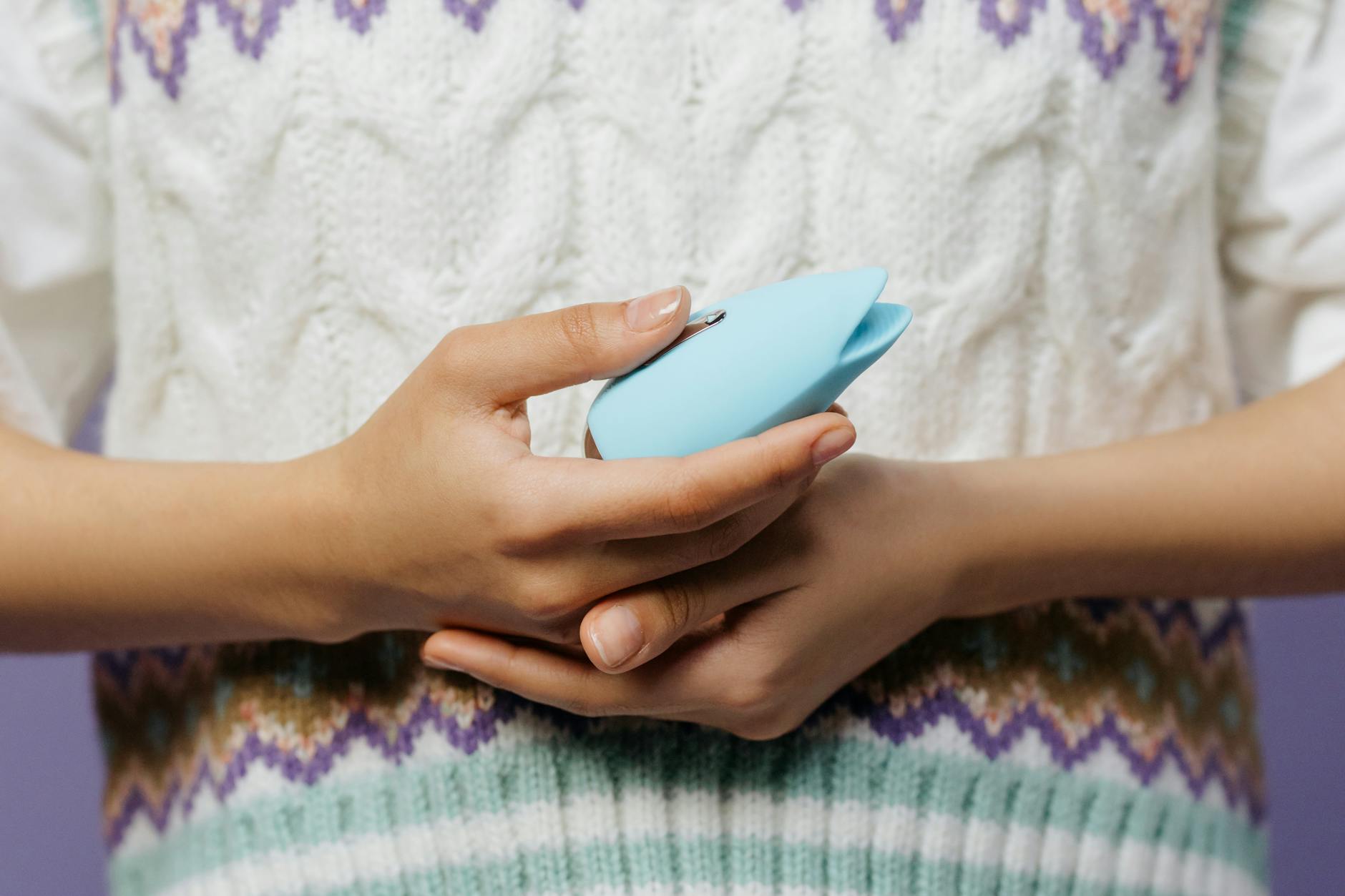
Photo by cottonbro studio on Pexels
Timing matters more than you think
When your hormones are in flux, arousal doesn't work on demand anymore. It shows up when conditions align, not when you schedule it.
Track when you feel even the smallest spark of arousal or curiosity. Is it a certain time of day? After exercise? When you're alone? When you're stressed? This isn't therapy. It's data. Use your lemon vibrator during those windows, not against them.
Many people rebuilding desire after hormonal shifts find that solo exploration with a clitoral vibrator is more successful than partnered sex initially. Your nervous system is already dealing with change. Removing the pressure of performance often lets arousal return faster.
When hormonal desire loss is part of something bigger
If your desire dropped alongside medication (birth control, antidepressants, blood pressure meds), talk to your prescriber. Sometimes a dosage adjustment or switching medications helps. A lemon vibrator is powerful, but it's not a substitute for addressing the root cause.
If hormonal shifts came with other symptoms like mood changes, pain, or exhaustion, see a doctor who specializes in hormonal health. Desire loss is often a symptom pointing to something treatable.
What I'm saying is this: a lem vibrator helps you rebuild sensation and arousal. But if the underlying hormonal picture is chaotic, fixing that first makes everything easier.
The permission piece (which is honestly half the battle)
Most people whose desire dropped after hormonal shifts carry guilt about it. You're supposed to just want sex. You're supposed to be automatically attracted to your partner. Your body is supposed to cooperate.
Except hormones don't work that way. Desire is neurochemical. When the chemistry changes, desire changes. Using a lemon sexual toy isn't a workaround for broken desire. It's a tool for rebuilding arousal in a body that's genuinely different right now.
Give yourself permission to explore what works for this version of your body, not the version that existed before hormonal shifts. That permission is often what unlocks arousal more than the toy itself.
Common questions about lemon vibrators and desire rebuilding
How long does it take for desire to come back when using a lemon vibrator?
Sensation usually returns within two to four weeks of consistent use. Desire takes longer, usually four to twelve weeks, because it's not just physical. It involves your mental state, your relationship, your stress level, and your hormones stabilizing. Be patient with the timeline. Rushing this process often backfires.
Can I use a lemon clitoral vibrator if I'm on hormonal birth control that's killed my desire?
Yes. But also talk to your doctor about the birth control itself. Some methods kill desire less than others. A lemon vibrator helps rebuild sensation, but if the medication is the blocker, you might need to adjust that first. Sometimes it's both. Tool plus medical support.
What if my partner is uncomfortable with me using a lemon vibrator during hormonal desire loss?
That's a separate conversation from the toy itself. You might say something like, "My hormones shifted and I'm trying to reconnect with sensation. This tool helps. It's not about you. It's about me understanding my body right now." If your partner remains uncomfortable, couples counseling often helps. Desire loss is stressful for both people, and a professional can help you navigate that.
Is it normal that orgasms feel different when using a lemon vibrator after hormonal shifts?
Completely normal. Hormonal shifts change orgasm intensity, duration, and sensation. Your clitoris might be less sensitive or more localized. Your lemon vibrator might feel like it's doing less than it used to. You're not using it wrong. Your body is just responding differently right now. That usually normalizes as hormones stabilize.
Can I use lemon vibrators alongside therapy for desire loss?
Absolutely. In fact, that combination often works better than either alone. A good therapist can help you work through any shame or relationship dynamics tangled up in your desire loss. Your lemon vibrator handles the sensation and nervous system piece. Together, they address both sides of the problem.
What settings should I use on my lem vibrator when rebuilding desire after hormonal shifts?
Start at pattern one or two and stay there for at least two weeks. The impulse is usually to jump to higher intensity because you're not feeling much. Resist that. Your nervous system is sensitizing slowly. Give it time to catch up. After four weeks, you can experiment with higher patterns if you want, but many people find the gentler settings are all they need.
The bigger picture
Desire loss after hormonal shifts isn't a personal failure. It's not a sign your relationship is broken or your body is broken. It's a sign that your neurochemistry changed, and you need to rebuild arousal pathways that work with your new chemistry instead of against it.
Lemon vibrators, designed for clitoral stimulation through gentle suction, make that rebuilding process feel less mechanical and more sustainable. You're not forcing arousal. You're coaxing your nervous system back to life.
Start small. Give yourself grace. Track what works. And remember that desire comes back. It just needs the right conditions and sometimes a tool designed to meet your body where it actually is right now.
If you're struggling with desire loss and want to explore this further, reach out. We're here to help.