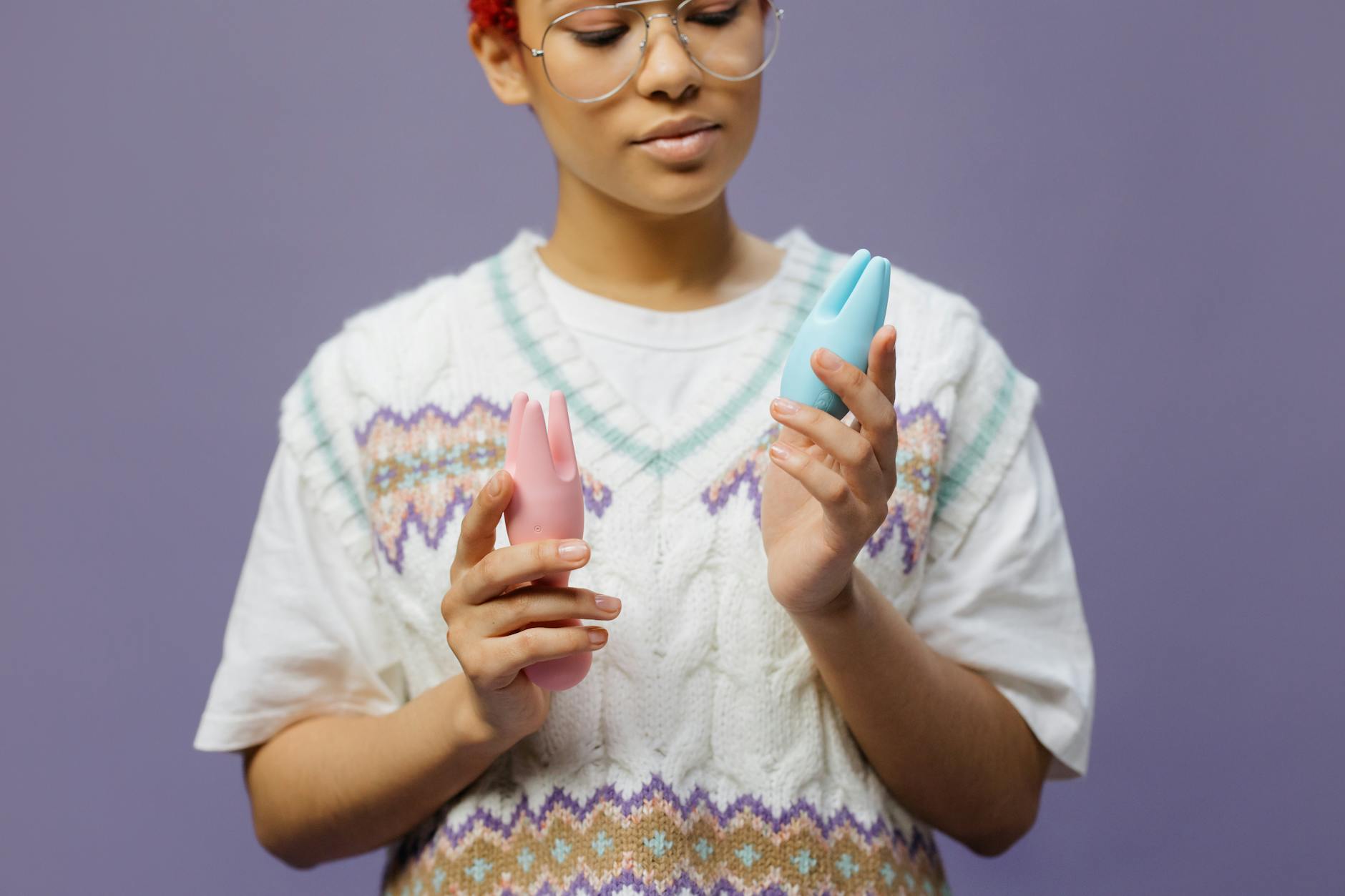
Let's reframe this first
Solo pleasure with a lemon vibrator isn't something you do because you don't have a partner. It's something you do because your nervous system, your brain, and your body deserve attention that only you can give yourself. That's not sad. That's radical self-knowledge.
Here's what I've seen in 20 years of coaching: people who have a consistent solo practice know their bodies better, communicate their needs more clearly, and actually enjoy partnered sex more when it happens. The solo time isn't a workaround. It's the foundation.
Why a lemon vibrator changes the solo game
A clitoral vibrator like the Lem works differently than fingers or other toys. The suction-based stimulation isn't mimicking anything else. It's its own sensation entirely. That matters for solo exploration because you're not trying to recreate partnered sex. You're discovering what feels good when the only pressure is the one you're choosing.
With your hands, arousal takes a long time. With a lemon clitoral vibrator, you're accessing stimulation that's consistent, hands-free, and adjustable across multiple patterns. That consistency is key: your body learns what to expect, and your nervous system can actually relax into pleasure instead of always wondering what's next.
Building a sustainable solo practice
There's a difference between masturbation and a solo pleasure practice. Masturbation is the act. A practice is intentional, recurring, and something you show up for the way you'd show up for a massage or a workout.
Three things make a practice stick:
1. Consistency over intensity. Once or twice a week is infinitely better than chaotic binges followed by months of nothing. Your brain benefits from rhythm. Your body learns what's coming. That predictability is calming, not boring.
2. A dedicated space. Not a whole room. A corner of your bedroom, a specific chair, somewhere that's yours and where you feel safe. Your nervous system registers this as "this is a place where my pleasure is allowed," and it relaxes faster.
3. Zero time pressure. This is the hardest part. Budget 45 minutes and then actually use it. Not rushing to the finish line. Exploring the different patterns on your Lem, noticing how your body responds to pattern 2 versus pattern 5, whether you prefer the contact point slightly higher or lower.
How to actually use a lemon vibrator for solo exploration
Start with the device off. Hold it. Feel the weight. Notice the temperature as it warms to your skin. This sounds silly, but your body needs time to register that something is happening. Many people skip this and miss an entire dimension of sensation.
Begin on pattern 1 or 2. Not the highest setting. You're not trying to prove anything. Apply light contact first. The Lem works best with gentle contact. You're not pushing it into your body. You're letting it rest against your clitoris and letting the suction do the work.
Pay attention to where the contact feels best. Slightly left? Slightly right? Dead center? Your clitoris has a shape and a preferred angle. You're mapping it. This information matters, especially if you eventually have a partner who wants to know what you like.
Let arousal build slowly. Don't race. Spend 10 minutes just exploring different patterns at light contact. Notice which pattern makes your breath change. Which one makes you want to press closer. Which one feels good but not goal-focused.
If you want to orgasm, great. If you want to explore without a finish line, also great. Both are valid solo sessions.
What to expect emotionally
Solo pleasure brings up feelings that partnered sex often masks. Boredom. Impatience. Self-consciousness (yes, even alone). Frustration that your body isn't responding "fast enough."
All of that is normal. Boredom especially is a sign that you're moving too fast or not present enough. Slow down. Notice your breath. Feel your heartbeat. This is meditation with a vibrator, not a race.
Some people feel guilty about solo pleasure, particularly if they were raised with religious or cultural messaging that framed masturbation as wrong. If that's you: your body, your nervous system, your pleasure. You deserve to know what feels good. Solo exploration is how you reclaim that.
Using solo time as a reset tool
One of the underrated benefits of a solo practice is nervous system regulation. Your clitoris is connected to your vagus nerve. Gentle, consistent stimulation activates your parasympathetic nervous system. That's your rest-and-digest mode. That's where healing happens.
If you're stressed, anxious, or in a period of life transition, solo time with a lemon vibrator isn't frivolous. It's literally one of the fastest ways to downregulate your nervous system. Twenty minutes once or twice a week does measurable work on anxiety and sleep quality.
The transition from solo to partnered
If solo exploration eventually leads to partnered sex, here's what matters: how to use a lemon vibrator when returning to partnered sex after solo pleasure is a real skill that deserves its own attention. But the solo time is the prerequisite. You can't explain what you want from a partner if you don't know what you want from yourself.
Troubleshooting the stuck points
"I don't have an orgasm every time." You're not supposed to. Some sessions are about sensation. Some are about release. Both are working. Your nervous system isn't graded on achievement.
"I feel self-conscious even though I'm alone." That's internalized judgment, usually cultural or familial. It softens with time and repetition. The more you show up for yourself, the quieter that voice gets.
"I get bored by pattern 3 every time." Switch it. Pattern 1, 4, and 5 are valid. You don't have to use every setting. Use what works. That's the whole point of solo exploration: you get to decide everything.
"My body doesn't respond the way I expect." Arousal is not linear, even alone. Some weeks you're more responsive. Some weeks you're distracted or tired or hormonal. That's not failure. That's your body's actual data. Respect it.
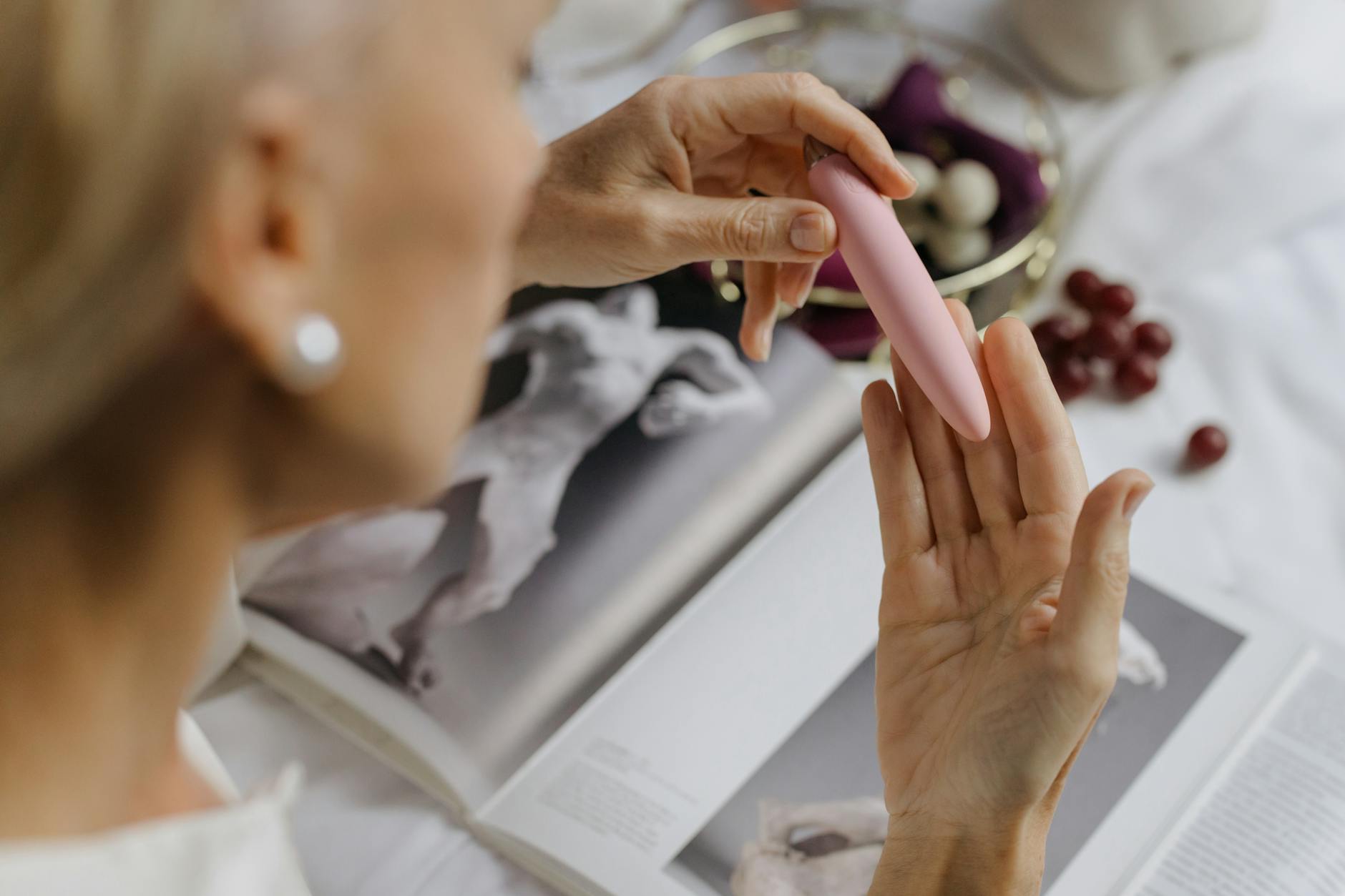
Photo by cottonbro studio on Pexels
Why this matters more than you think
I work with couples who struggle with desire mismatches, communication breakdowns, and resentment. Almost every single time, the missing piece is that one or both people never developed a solo practice. They don't know what they want. They've never spent intentional time with their own body. So when partnered sex happens, it's confusing and disappointing on both sides.
Solo exploration is not the opposite of partnered sex. It's the foundation. It's where you learn your own body. It's where you discover that pleasure isn't something that happens to you. It's something you create. And that knowledge changes everything about how you show up in intimacy.
How to make solo time non-negotiable
Treat it like you'd treat therapy or exercise. Schedule it. Same time, same day if possible. Tuesday nights. Saturday mornings. Whatever. The specificity helps. Your brain knows what's coming. Your body prepares.
Don't wait for the "right" mood. The mood comes after you start, not before. You'll be surprised how many times you feel resistant until you're 10 minutes in, and then suddenly your body is completely present.
If you live with others, a locked door and headphones or white noise are your friends. You deserve privacy for this. That's not shameful. That's healthy boundaries.
People also ask
How often should I use a lemon vibrator solo? Once or twice a week is ideal for building a sustainable practice. More is fine if you want it. Less is also fine. The key is consistency, not frequency.
Is solo pleasure with a vibrator normal if I have a partner? Completely. Solo exploration and partnered sex serve different functions. One isn't a replacement for the other. Many people with partners still maintain a solo practice, and it actually strengthens their sexuality.
What if I feel guilty about masturbation? That guilt usually comes from cultural or religious messaging you internalized. It's not truth. Your body, your pleasure, your choice. The guilt softens every time you choose yourself anyway. Repetition rewires the shame.
Can I use a lemon clitoral vibrator if I'm sensitive? Yes. Start on the lowest pattern with very light contact. The Lem's suction design is actually gentler than many vibrators because it doesn't rely on direct vibration. You control the intensity entirely.
How long does it take to "get good" at solo pleasure? There's no finish line. But you'll notice real shifts in body awareness and arousal response within 4-6 weeks of consistent practice. That's when your nervous system actually starts to relax into it.
What's the difference between a lemon vibrator and other clitoral vibrators for solo use? The suction design of the Lem creates a different sensation than traditional vibrators. It's more like a sustained pressure wave than rapid vibration. Many people find it easier to access sensation and orgasm with a lemon clitoral vibrator because the sensation is distinct and doesn't numb as quickly.
Solo pleasure is not the absence of partnered intimacy. It's the presence of self-knowledge. Build that foundation intentionally, and every other aspect of your sexuality benefits. If you want to talk through how to navigate solo pleasure in your specific situation, get in touch.
Sources
- Kontula, O., & Miettinen, A. (2016). Determinants of female sexual orgasms. Socioaffective Neuroscience & Psychology, 6(1), 31624.
- Taormino, T. (2012). The Ultimate Guide to Sex and Disability. Cleis Press.
- Kerner, I. (2006). She Comes First: The Thinking Woman's Guide to Female Sexuality. Regan Books.